
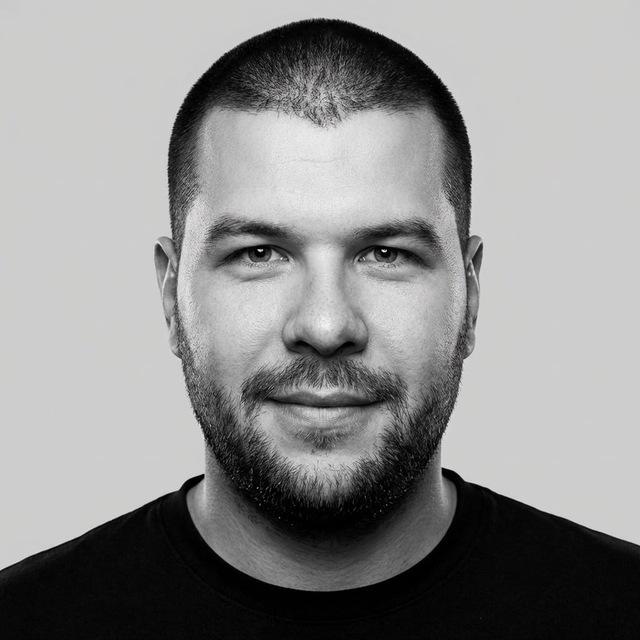

I avoided studio lighting for a long time.
Every time I tried it, the result came out flat and lifeless - "studio," but in the bad way. So I stuck to windows and lamps and told myself controlled lighting wasn't my thing.
Then it clicked: studio lighting isn't about removing shadows. It's about controlling them on purpose - putting light exactly where it needs to be, at exactly the strength required, to make a product or person look their absolute best. And that visible control is the entire message. When the viewer can see the shot was deliberately lit, their brain reads one word: premium.
These are the eight studio setups I prompt when an ad needs to say "premium" out loud - with the exact keywords, and which feeling each one carries.
Let's light it on purpose.
Why Studio Light Says "Premium" Out Loud
Studio light is the opposite of the last two lessons. There's no window, no lamp, no sun - just light placed with intent. And where indoor practical light hides its craft to feel real, studio light shows off its craft - and the showing-off is the point.
The Premium Tell: Studio lighting's visible control - a precise key, a clean falloff, a seamless dark background - signals to the viewer that money and intent went into the shot. The brain reads that as "premium brand." Everywhere else a "tell" reveals fakeness; here it reveals investment. The deliberate look is the positioning.
So the lighting trio is complete: outdoor light sets emotion (the natural light sources), practical indoor light sets place, and studio light sets status.
The 8 Studio Setups
| Setup | The signal it sends | Use for |
|---|---|---|
| Single softbox key | Clean, controlled, produced | beauty, spokesperson, premium |
| Softbox + fill reflector | Flattering, polished, safe | e-commerce beauty, older demos |
| Butterfly | Glamour, high fashion | luxury beauty, cosmetics |
| Rembrandt | Authority, gravitas | male grooming, finance, serious |
| High-key | Clean, open, transparent | wellness, clinical, e-com white |
| Low-key | Luxury, drama, mystery | fragrance, premium, men's |
| Hard light (no diffusion) | Raw, editorial, textured | fashion editorial, gritty beauty |
| Product on white | Hero, catalog, e-com | product shots, marketplace |
Single softbox key
The signal it sends
Clean, controlled, producedUse for
beauty, spokesperson, premiumSoftbox + fill reflector
The signal it sends
Flattering, polished, safeUse for
e-commerce beauty, older demosButterfly
The signal it sends
Glamour, high fashionUse for
luxury beauty, cosmeticsRembrandt
The signal it sends
Authority, gravitasUse for
male grooming, finance, seriousHigh-key
The signal it sends
Clean, open, transparentUse for
wellness, clinical, e-com whiteLow-key
The signal it sends
Luxury, drama, mysteryUse for
fragrance, premium, men'sHard light (no diffusion)
The signal it sends
Raw, editorial, texturedUse for
fashion editorial, gritty beautyProduct on white
The signal it sends
Hero, catalog, e-comUse for
product shots, marketplace
1. Single Softbox Key Light
One large, diffused source to the side and slightly in front - the foundational studio setup. The softbox is large relative to the subject, so it softens shadows and creates a smooth gradient across the face. Your entry point to a produced look.
Use for: beauty and skincare shots, premium spokesperson ads, any creative that needs a controlled look. Avoid when: the creative should feel casual or candid - a single softbox visibly reads as "lit."
single softbox key light, soft side lighting
large soft light source, one side lit
studio soft light, controlled shadow gradient
beauty dish key light, soft directional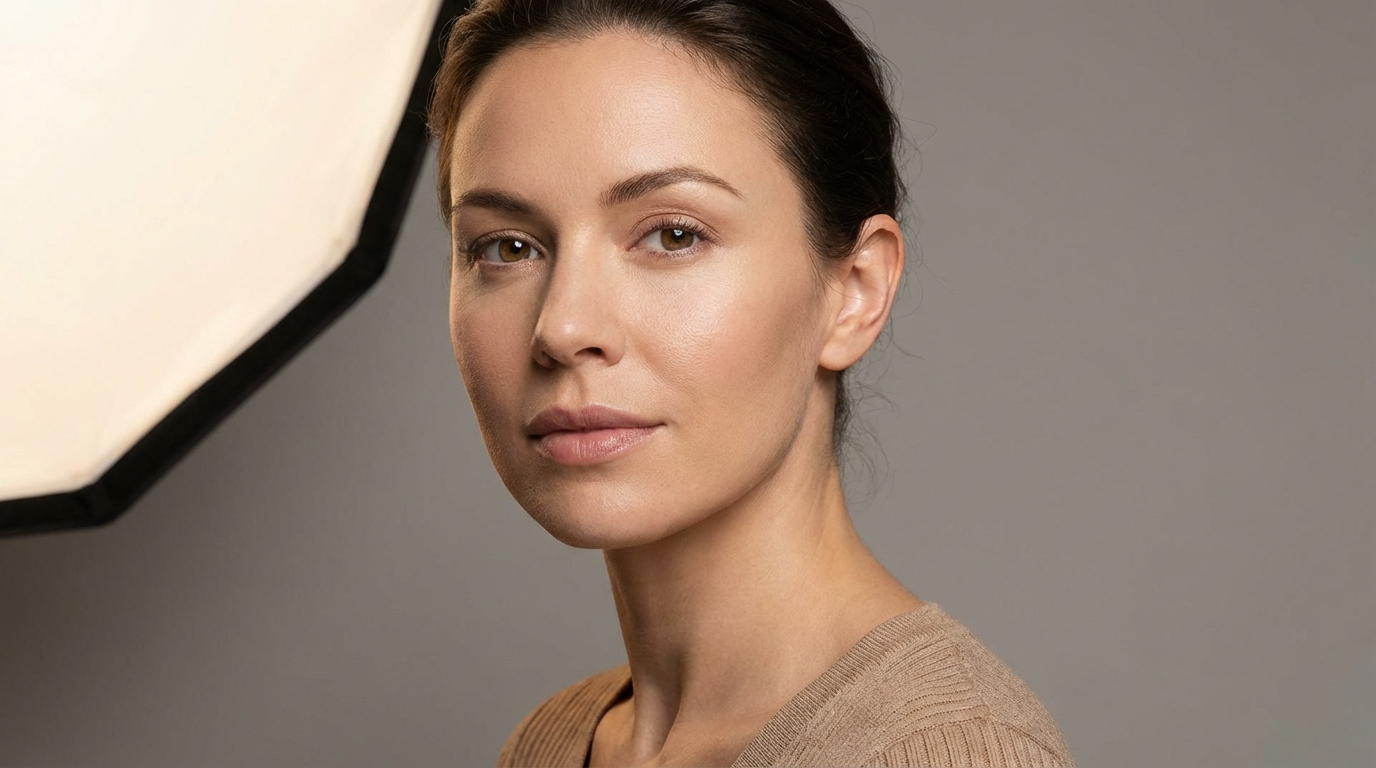
What you see: one side of the face is fully lit; the other falls into a soft-edged, gradual shadow - not dark, just less bright. No competing sources. Beautiful tonal range from highlight to shadow.
2. Softbox + Fill Reflector
The softbox setup with a white reflector on the shadow side, bouncing key light back to lift the darker half. The shadows are softened but not erased - dimension without heaviness. The most common professional beauty setup because it flatters without going flat.
Use for: premium beauty and skincare, e-commerce product photography, spokesperson ads for older demos where shadow reduction flatters. Avoid when: the creative needs dramatic contrast - a fill reflector removes the edge.
softbox key light with fill reflector
balanced studio, fill light on the dark side
soft shadow fill, balanced studio portrait
professional beauty lighting, minimal shadow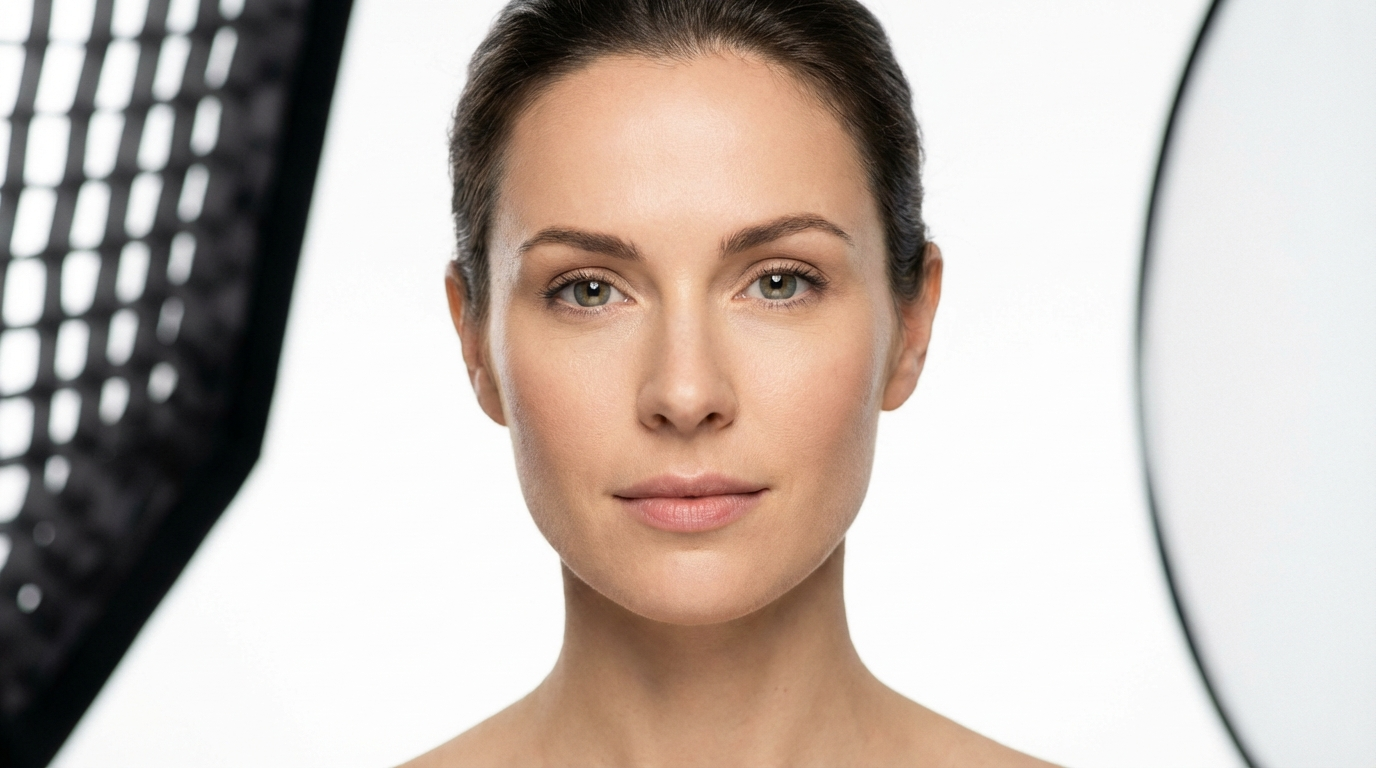
What you see: both sides are lit but not equally - the key side brighter, the fill side softer. The remaining shadows give shape without going dark. Polished and flattering without feeling artificial.
3. Butterfly Lighting (Glamour)
The key light sits directly in front of and above the subject, aimed down - casting a small butterfly-shaped shadow under the nose. The signature of classic Hollywood and high-fashion beauty. Symmetrical, sculpted, glamorous.
Use for: premium beauty, high-fashion-adjacent creative, luxury cosmetics, glamour shots. Avoid when: the creative needs approachability - butterfly is precise and symmetrical, which can read cold.
butterfly lighting, shadow under nose
paramount lighting setup, symmetrical
overhead frontal key light, butterfly shadow
glamour lighting, classic Hollywood, high fashion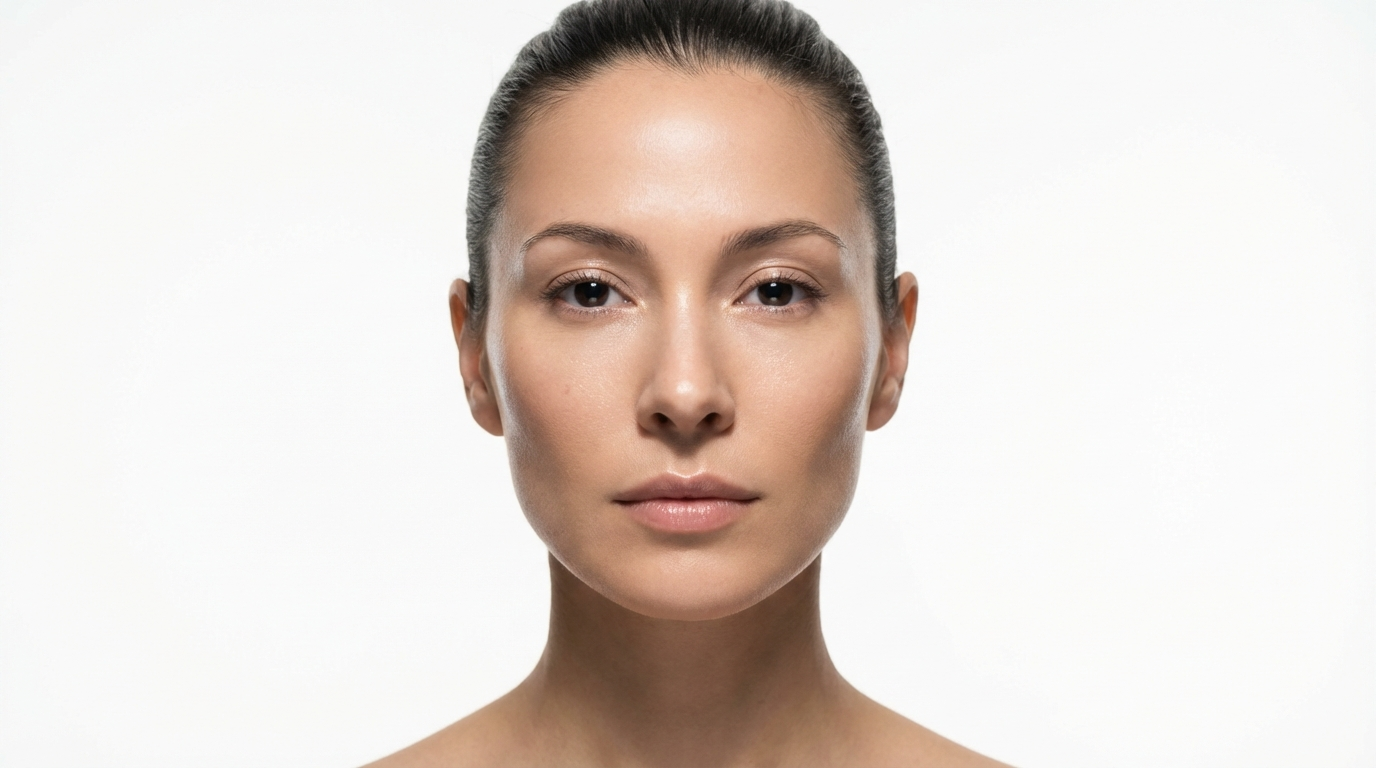
What you see: the nose casts a small shadow straight down - the setup's signature. The cheekbones catch light and sculpt. Symmetrical and centered. This is the lighting of magazine covers from the 1940s to today.
4. Rembrandt Lighting (Authority)
A key light high and to one side, creating a small triangle of light on the shadow-side cheek. Named after the painter who used it constantly. Two-thirds of the face in light, one-third in shadow, with that small triangle the exception. Serious, cinematic, authoritative.
Use for: premium male grooming, serious brand positioning, finance and professional products with a lifestyle element, any tone that needs gravitas. Avoid when: you need approachability or warmth - Rembrandt is dramatic and directional.
Rembrandt lighting, triangle of light on shadow cheek
high side key light, dramatic shadow
two-thirds lit face, dramatic shadow portrait
cinematic portrait lighting, Rembrandt setup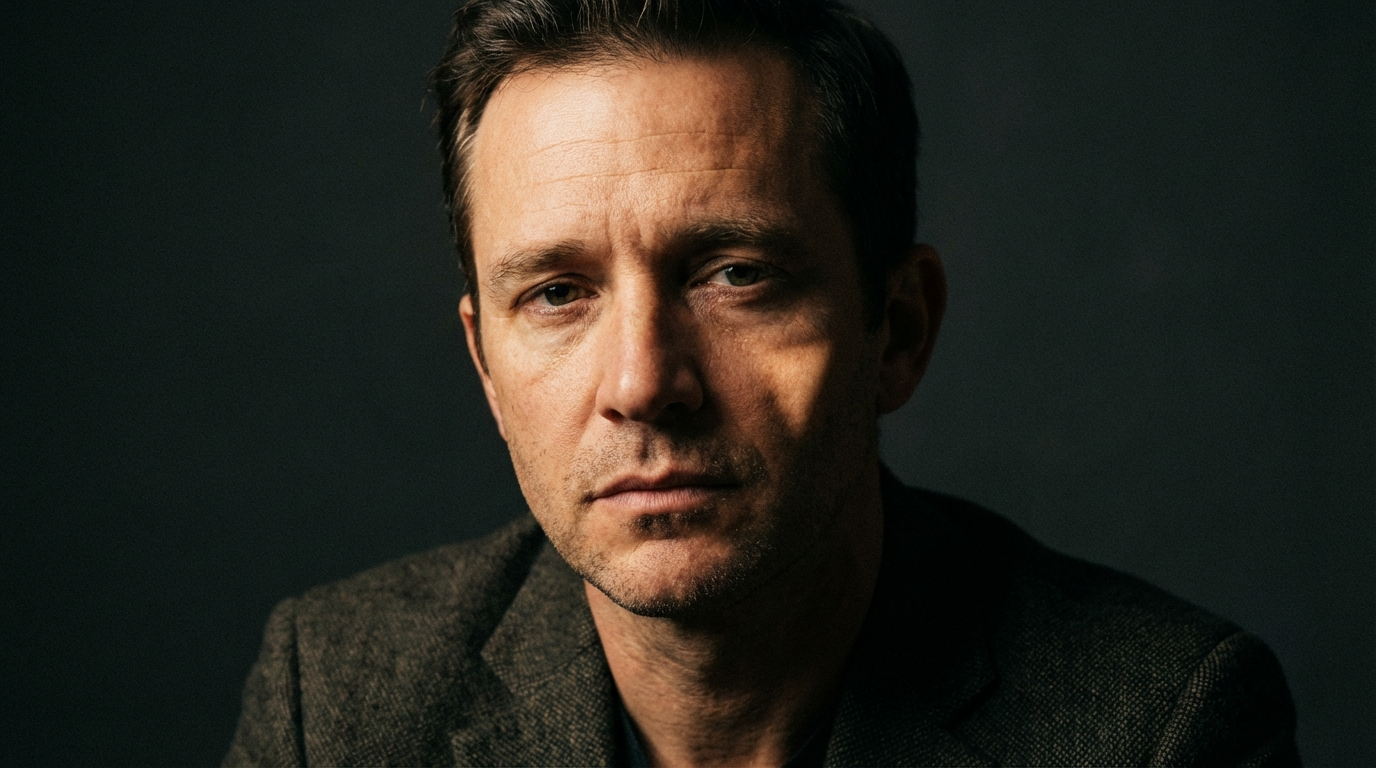
What you see: most of the face lit from one side, the other in shadow - except for a small triangle of light beneath the eye. That triangle is the whole signature. This is how you light someone who has authority.
5. High-Key (Clean)
The whole frame is bright - white or very light background, subject evenly lit from multiple sources, minimal shadow, high exposure. Clean, open, clinical. Nothing hidden. The lighting of confidence and transparency.
Use for: skincare, wellness, medical-adjacent products, e-commerce on white, any creative where clean and cheerful is the tone. Avoid when: the creative needs atmosphere, intimacy, or drama - high-key removes all three by design.
high-key lighting, bright even exposure
white background, fully lit subject
minimal shadow, high-key portrait
commercial high-key product lighting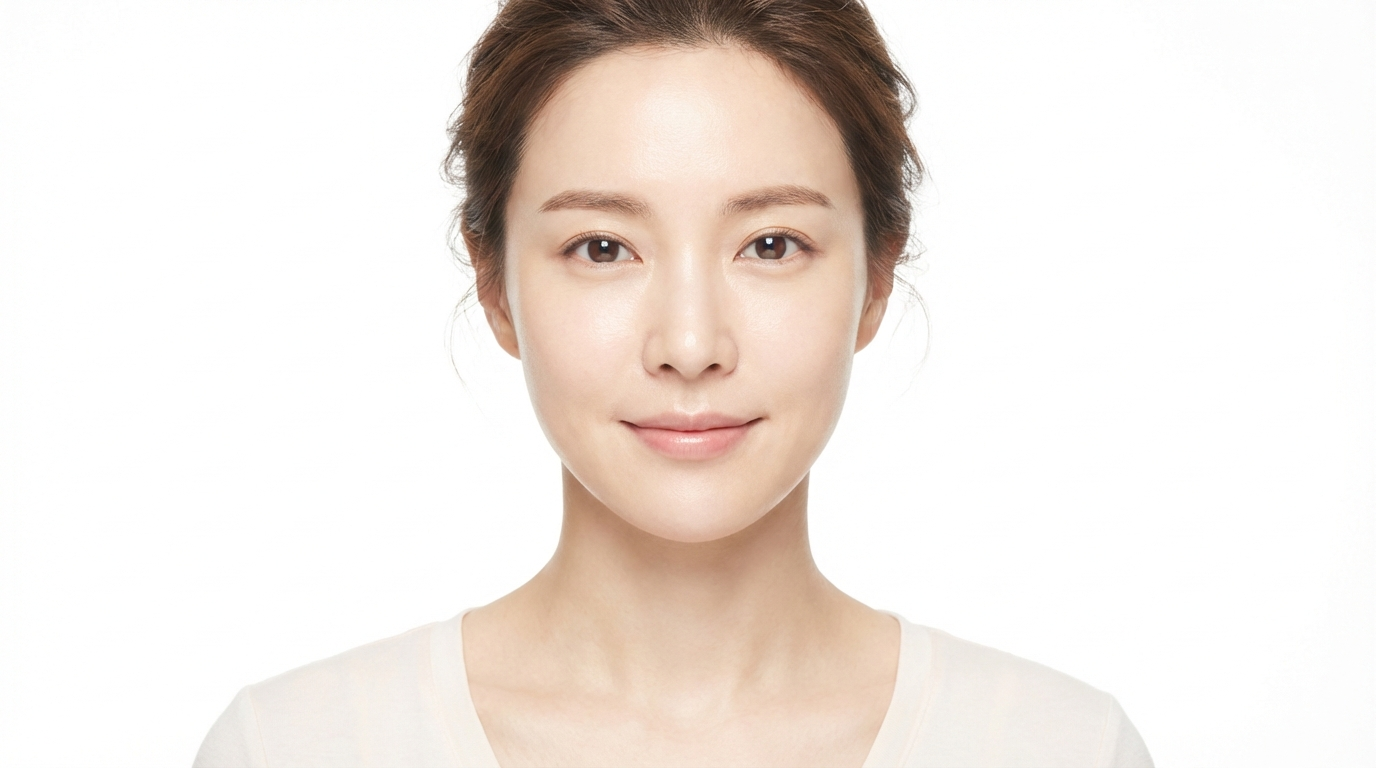
What you see: a pure white background with the subject lit to match. Almost no shadow - just slight tones defining shape. Everything visible and accessible. The openness of a room with no corners.
6. Low-Key (Luxury)
The opposite - a dark background, the subject lit by a single controlled source, most of the frame in shadow. The light hits exactly what it was pointed at and nothing else. Dramatic, luxurious, premium.
Use for: luxury and premium product photography, men's grooming, fragrance, high-end cosmetics. Avoid when: the creative needs clean or accessible energy - low-key is dark and dramatic.
low-key studio lighting, dark background
single light source, deep shadow
moody studio lighting, subject emerging from shadow
high contrast low-key lighting, luxury feel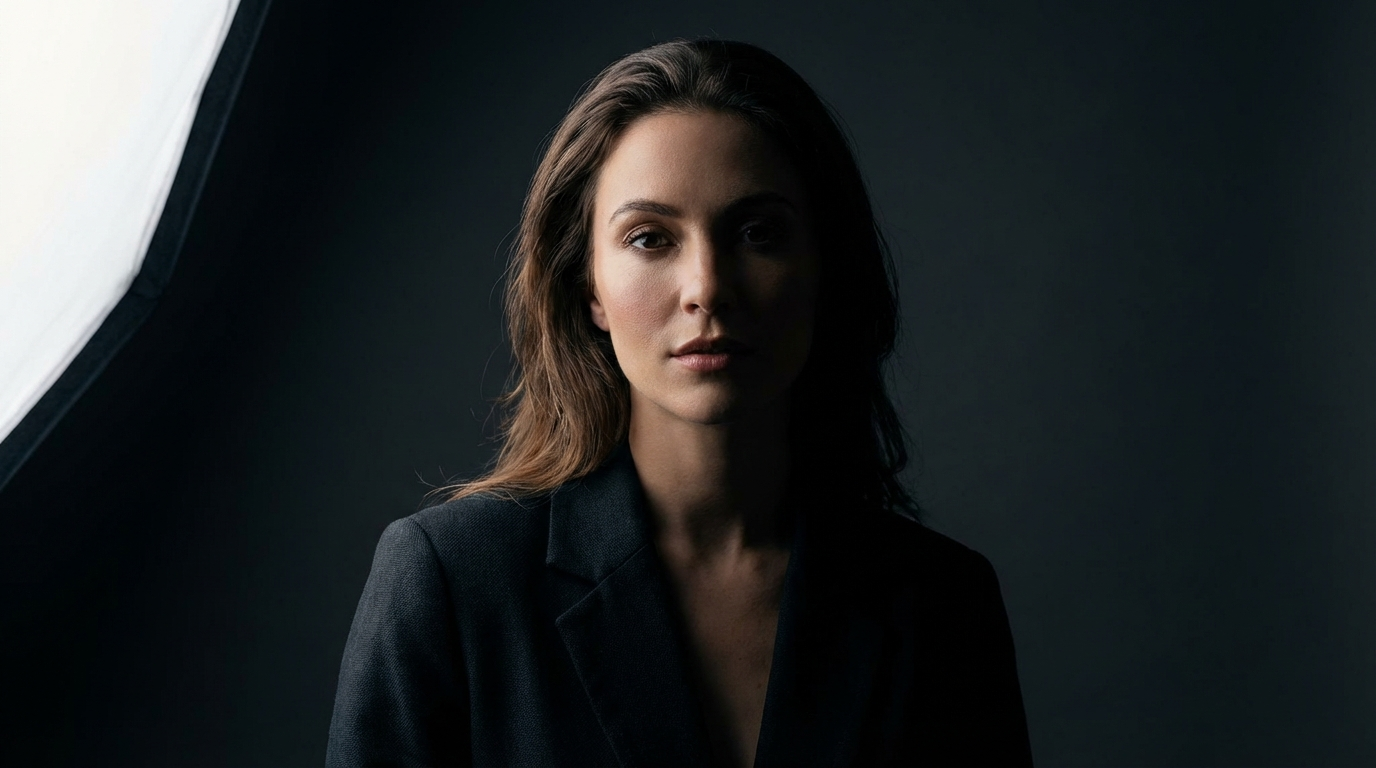
What you see: a near-black background, the lit side bright and precise, the transition into shadow dramatic. The subject emerges from darkness. Pairs beautifully with the shallow-depth premium look from focal length for ads.
7. Hard Light, No Diffusion (Editorial)
A bare bulb, no softbox - direct, hard, undiffused light with sharp shadow edges, high contrast, and every texture visible. The opposite of flattering, used deliberately for editorial impact.
Use for: fashion editorial, gritty beauty campaigns, skin-texture demonstrations, any raw directional look. Avoid when: the creative needs to be flattering or broadly commercial - hard light is an editorial choice not every brand can carry.
hard studio light, sharp shadow edges
undiffused direct light, high contrast
bare bulb lighting, no softbox
editorial hard light, texture-revealing, sharp and unforgiving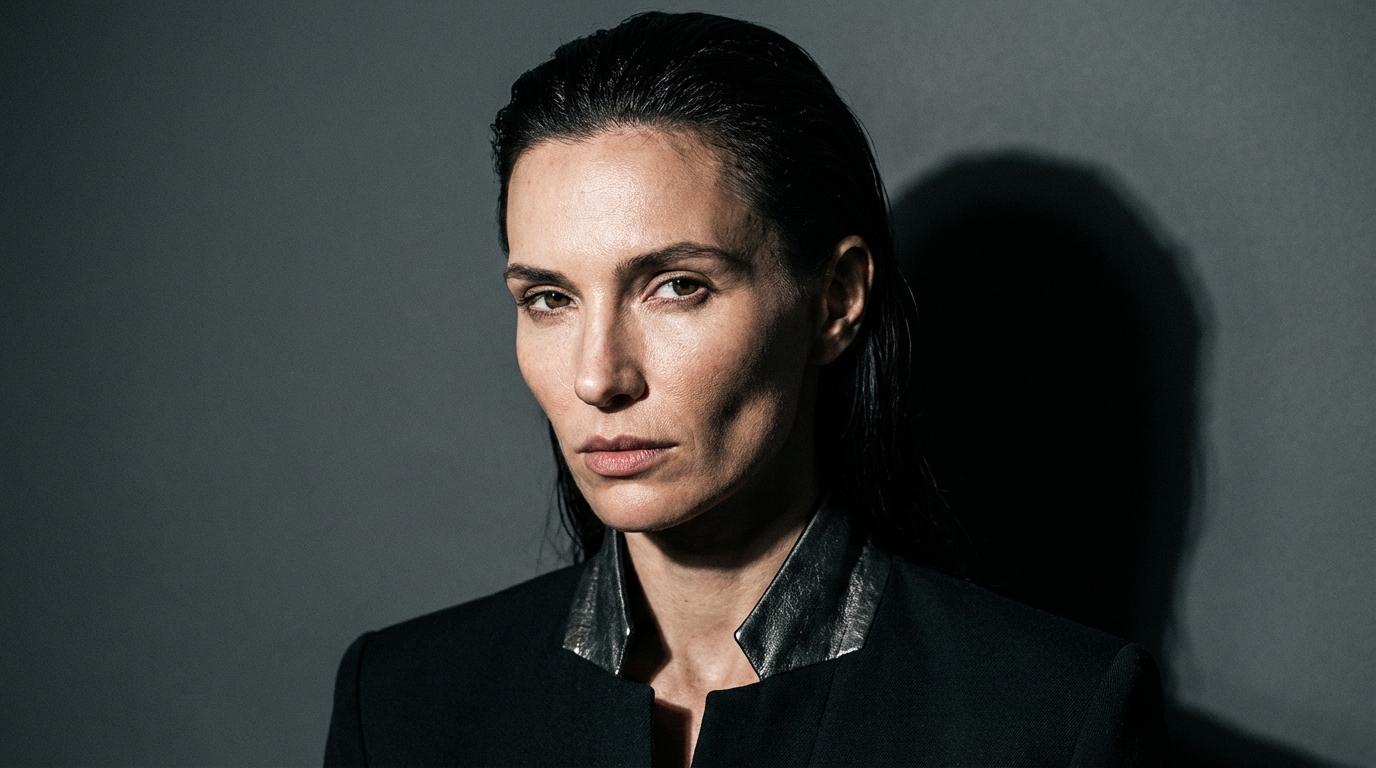
What you see: sharp shadow edges with clean hard borders. The skin shows every pore because hard light hides nothing - which makes it a perfect partner for the texture detail in realistic AI skin. Editorial energy, not flattery.
8. Product Lighting on White (E-com)
A product on a pure white or very light background, lit to show form, material, and detail, with a soft shadow anchoring it to the surface. The classic e-commerce and premium product look.
Use for: e-commerce product shots, marketplace listings, any creative where the product is the hero. Avoid when: the product needs lifestyle or environmental context - isolation removes all of it.
product on white background, commercial photography
isolated product shot, studio white background
e-commerce product lighting, clean shadow beneath
hero product shot, subtle soft shadow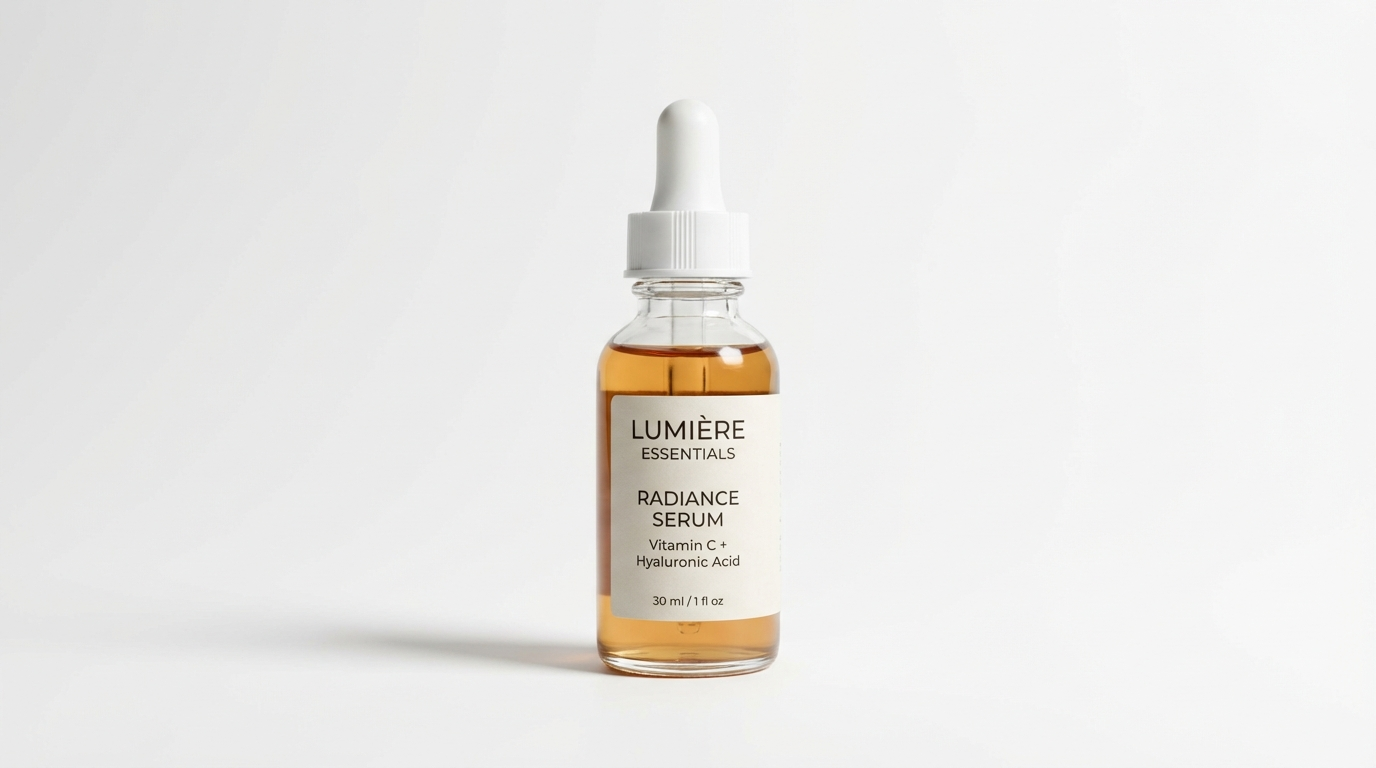
What you see: a pure white background with the product lit from one direction. A soft shadow beneath confirms it's on a surface. The glass catches light in a single clean highlight streak. Catalog-ready.
The Full Studio Light Stack
Studio light lives in the Light slot of the prompt structure, and the premium look comes from layering the setup:
Premium beauty portrait of a woman in her early 30s holding a skincare
product, large softbox key light from the left at 45 degrees, white
reflector fill on the right, subtle rim light from behind, dark neutral
low-key background, 85mm lens, photorealistic professional beauty
photography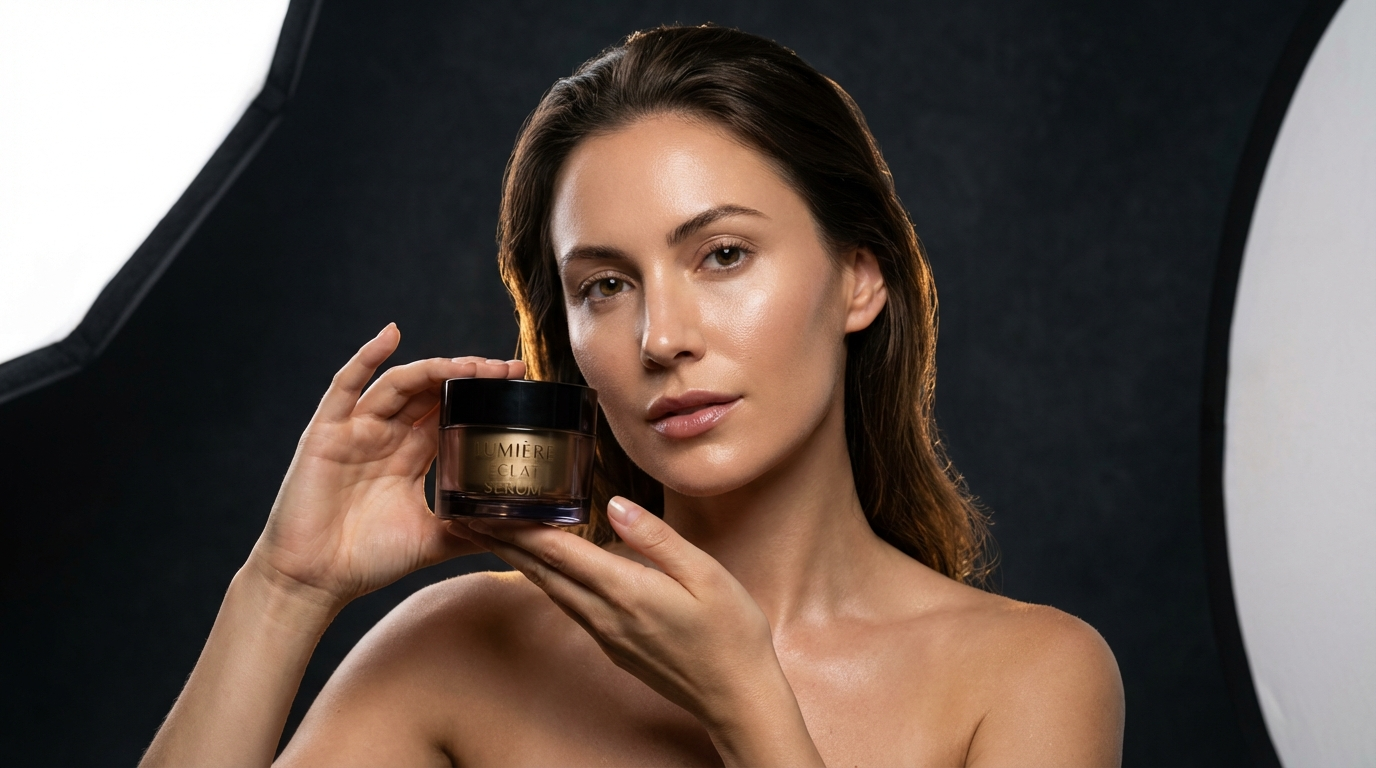
A key, a fill, a rim, and a low-key background - a four-point setup that puts the woman and product exactly where studio quality wants them. Directional depth, clean control, and the unmistakable signal that this shot cost something.
Note
Conclusion: Control Is the Message
Four to lock in:
1. Studio light shows its craft on purpose. Where practical light hides the setup to feel real, studio light reveals it to feel premium. The visible control is the positioning.
2. Each setup carries a fixed meaning. Butterfly for glamour, Rembrandt for authority, high-key for clean, low-key for luxury, hard for editorial. Pick by the word you want the ad to say.
3. High-key vs low-key is a brand decision. Bright and open reads accessible and transparent; dark and dramatic reads luxury and exclusive. Opposite audiences.
4. It never happens by accident. Studio lighting is what you reach for when the ad needs to announce premium - not whisper it.
The rule of thumb: every studio setup is a decision about how much you want the viewer to see and how precisely you want them to look.
So the move: take a flatly-lit product or spokesperson shot and regenerate it with a low-key setup - single source, dark background, deep shadow. Same subject. My bet is it instantly looks three times more expensive - because control, not brightness, is what reads as premium.
Steal my ad concept & hook library
Every prompt, archetype, and hook I use in my own accounts. Updated weekly.
Join the free Skool community