
Here's a mistake I made on every AI ad for months.
I kept making the model prettier. Smoother skin, more symmetry, no blemishes, poreless glow. And the face came out looking like a mannequin that could be anyone - instantly, unmistakably AI.
The instinct is backwards.
A face doesn't read as real because it's beautiful. It reads as real because it's specific - one particular person, with this exact scatter of freckles and that small blemish on the chin. Perfect skin is the tell. Real skin is the fix.
These are the six skin micro-details I prompt to make an AI face belong to an actual human. When to use each, when to hold back, and the exact prompt keywords.
Let's make the face real.
Why AI Faces Look Fake
The default AI face is flat.
One even skin tone, no pores, no texture, flawless symmetry. It's the average of every retouched photo the model ever trained on - and the average of everything is nobody.
Here's the principle that fixes it. I call it The Specificity Test:
The Specificity Test: a face reads as real when it's specific enough to belong to one particular person, not generic enough to be anyone. The eye judges "real human" by texture, variation, and small imperfections - never by beauty. Perfection is the thing that flags AI.
So the job isn't to idealize the face. It's to make it particular.
Every detail below is a way to add specificity - a reason for the eye to conclude "there's a real person in there" before it reads a single word of your copy. If the wider quality problem is what you're chasing, start with why AI ads look fake.
The 6 Micro-Details That Make Skin Real
Here's the full set, at a glance, before we break each one down:
| Detail | What it signals | Lead prompt term |
|---|---|---|
| Visible pores | Skin wasn't retouched into plastic | visible pores, natural skin texture |
| Skin tone variation | Blood and circulation under the surface | natural skin tone variation |
| Subtle freckles | A specific, memorable person | light natural freckles across nose and cheeks |
| Sun-kissed redness | Someone who lives in the world | sun-kissed cheeks, slight redness on nose bridge |
| Micro-texture / grain | Material weight, not matte plastic | skin grain visible, fine texture |
| Imperfection signals | A real history - trust | slight under-eye circles, real person look |
Visible pores
What it signals
Skin wasn't retouched into plasticLead prompt term
visible pores, natural skin textureSkin tone variation
What it signals
Blood and circulation under the surfaceLead prompt term
natural skin tone variationSubtle freckles
What it signals
A specific, memorable personLead prompt term
light natural freckles across nose and cheeksSun-kissed redness
What it signals
Someone who lives in the worldLead prompt term
sun-kissed cheeks, slight redness on nose bridgeMicro-texture / grain
What it signals
Material weight, not matte plasticLead prompt term
skin grain visible, fine textureImperfection signals
What it signals
A real history - trustLead prompt term
slight under-eye circles, real person look
Now the detail.
1. Visible Pores
Pores are the proof of skin. Their presence tells the eye the image wasn't retouched into plastic - and for skincare ads, showing pore texture before and after is the entire narrative. Without them, even a great product shot reads as fake.
Use for: skincare close-ups, before/after hooks, "proof" shots, texture demos. Avoid when: shooting from a distance where pores wouldn't show anyway, or brand-level shots that intentionally idealize.
visible pores, natural skin texture
open pores on nose and cheek
skin pore detail, macro photography
unretouched pore texture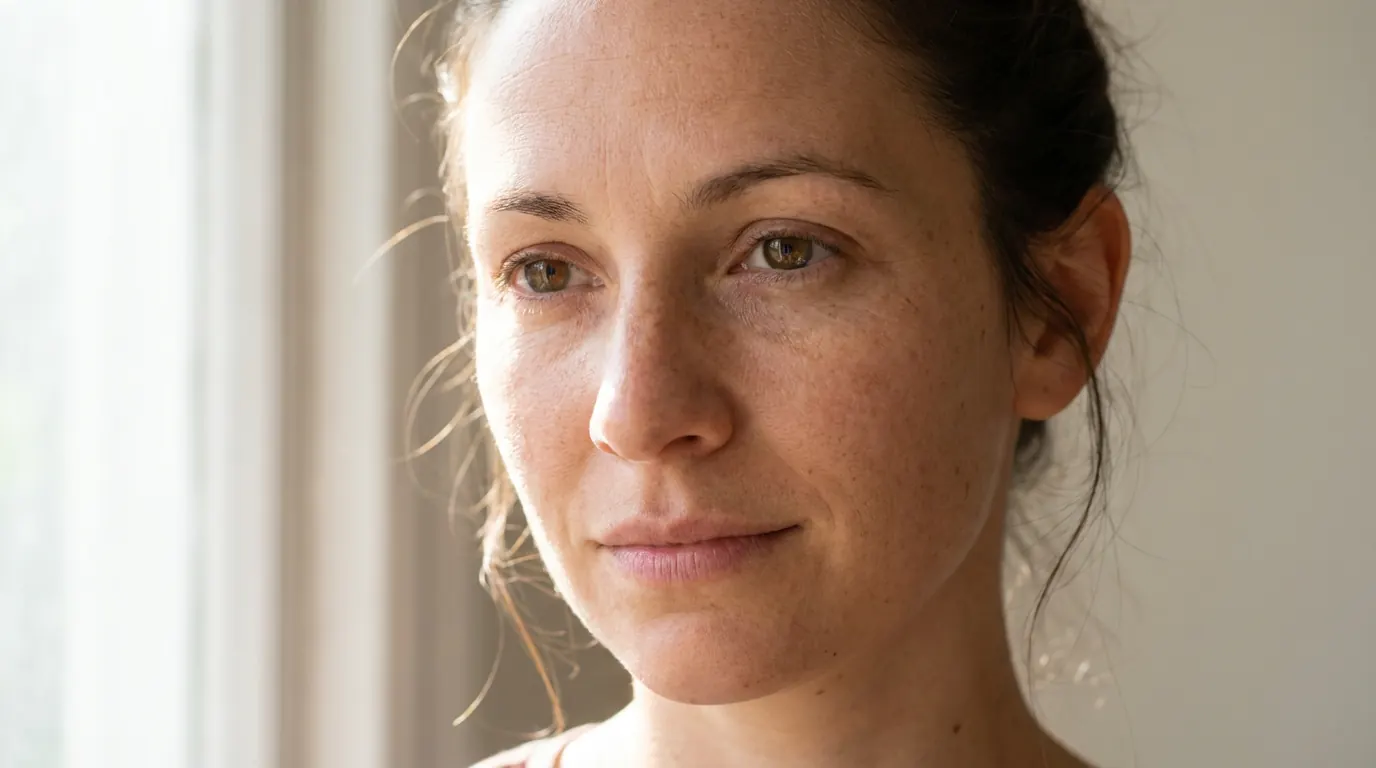
What you see: the nose bridge and cheeks show fine pore texture. The skin has surface depth instead of a flat matte finish.
2. Natural Skin Tone Variation
Real skin is never one flat color. The nose runs slightly redder. The undereye is cooler. The forehead catches light differently than the cheeks.
Flat, even skin tone is the single clearest signal an image is AI.
Use for: every close-up face shot, spokesperson ads, beauty and skincare creative. Avoid when: you explicitly want a stylized editorial look where uniformity is the aesthetic.
natural skin tone variation, slight redness on nose
uneven complexion, realistic skin undertones
cool undertones under eyes, warm on cheeks
natural flush, skin color variation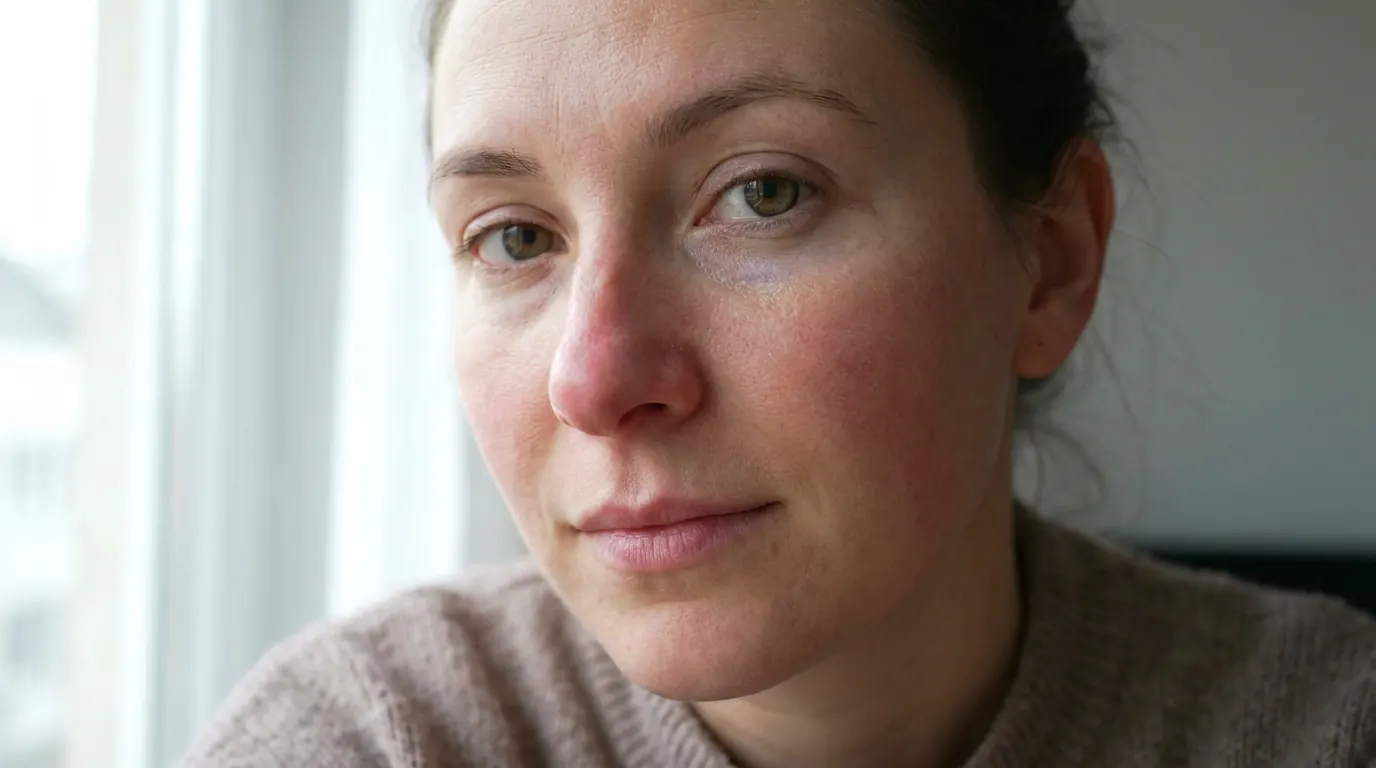
What you see: the face is no longer one flat color. The nose reads slightly warmer, the undereye slightly cooler. The skin becomes a living surface with blood and circulation underneath it.
3. Subtle Freckles
Freckles are identity markers. They make a face memorable and specific - the opposite of the generic AI face that could be anyone. Even a light scatter reads as "real person" to the eye.
Use for: natural beauty ads, sun-care, lifestyle and outdoor creative, UGC-style content. Avoid when: the brief calls for a very polished or luxury aesthetic where naturalness isn't the signal.
light natural freckles across nose and cheeks
subtle sun freckles, scattered across face
faint freckle pattern, natural skin
sparse freckles, editorial beauty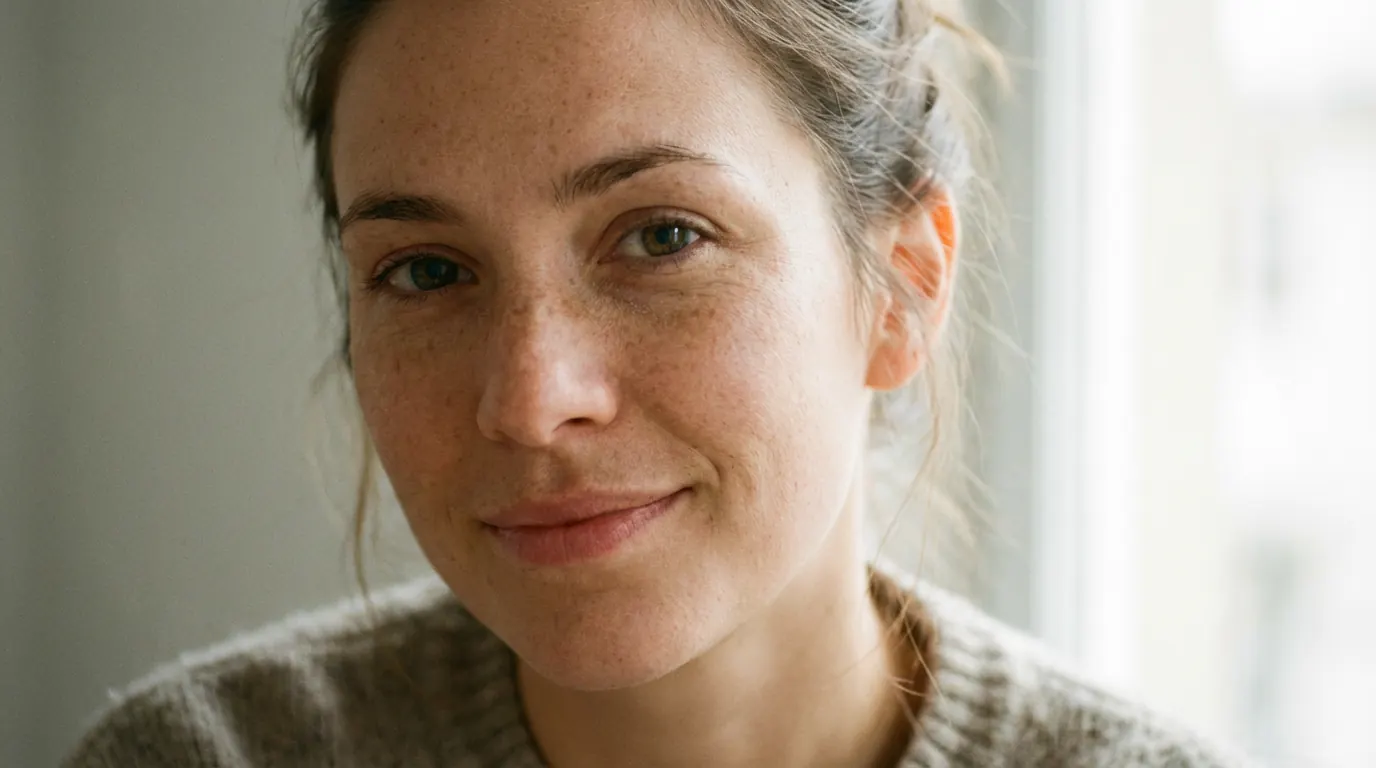
What you see: a light scatter of freckles across the nose bridge and upper cheeks. The face immediately becomes specific - it belongs to someone particular. That's The Specificity Test passing in real time.
4. Sun-Kissed Redness
Slight warmth on the nose bridge, cheekbones, and forehead - the color of someone who's been outside. It's one of the fastest ways to add life to an otherwise flat face, and it naturally pulls the viewer's eye to the center of the face.
Use for: outdoor lifestyle, fitness, summer campaigns, natural and clean beauty. Avoid when: the ad is about correcting redness, or you're running clinical skincare messaging where redness is the problem.
sun-kissed cheeks, slight redness on nose bridge
outdoor flush, rosy cheekbones
natural redness from sun exposure
warm redness on cheeks and forehead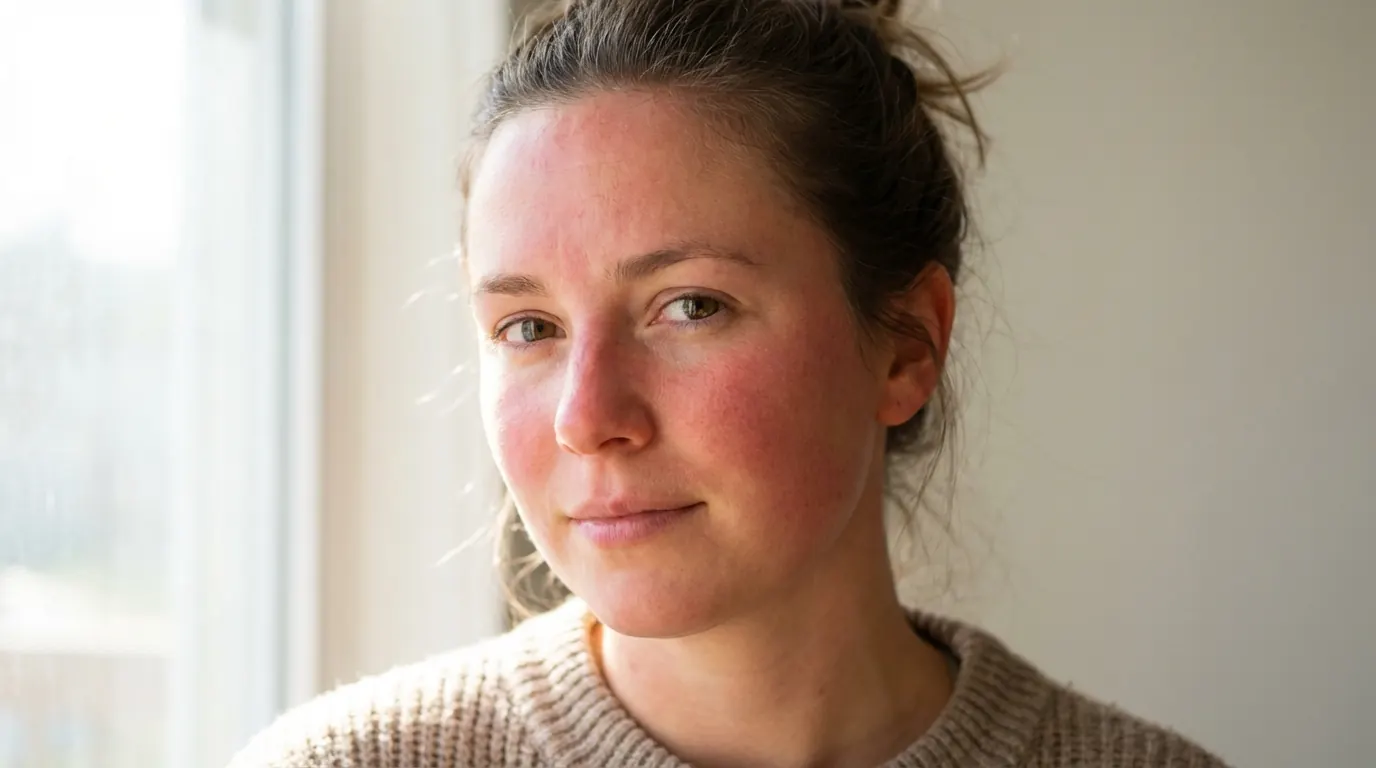
What you see: warm color concentrates on the cheekbones and nose bridge - the areas that catch sun first. The face reads as someone who lives in the world, not in a studio.
5. Micro-Texture & Skin Grain
The fine surface texture visible in close-up - the slight roughness of a lip, the texture of an eyelid, the faint lines around the eyes. Without it, skin looks like matte plastic. With it, the face gains material weight.
Use for: any close-up face shot, macro-range beauty ads, product-on-skin demos. Avoid when: shooting at distances where this detail wouldn't be visible anyway.
skin grain visible, fine texture
natural skin surface texture, slight roughness
micro skin texture, close-up detail
fine lines and natural skin grain, unretouched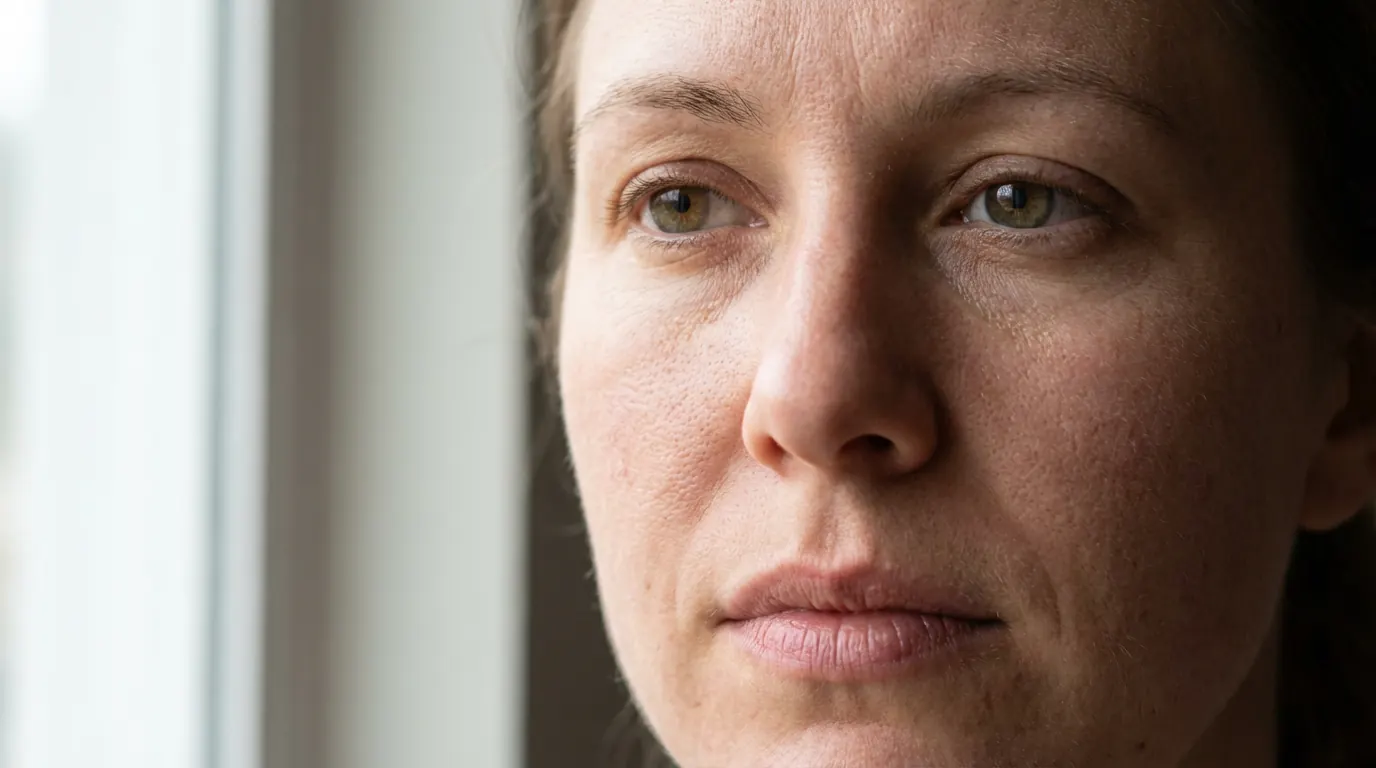
What you see: the skin surface has material weight - cheeks aren't porcelain-smooth, lips have fine horizontal texture, the face shows the faint natural folds of real tissue. It stops looking like a render and starts looking like a photograph of something physical.
6. "Imperfection" Signals
A small blemish. An asymmetric feature. A slightly uneven lip line. The hint of under-eye circles.
Not flaws - proof of humanity. These are the details that make UGC testimonials credible and spokesperson ads trustworthy.
Use for: testimonial-style ads, real-person hooks, problem/solution openers, trust-building creative. Avoid when: running aspirational or luxury positioning where the implicit promise is perfection.
one small blemish on chin, natural skin
slight under-eye circles, real person look
asymmetric features, natural face
faint acne scarring, authentic skin
natural lip asymmetry, unretouched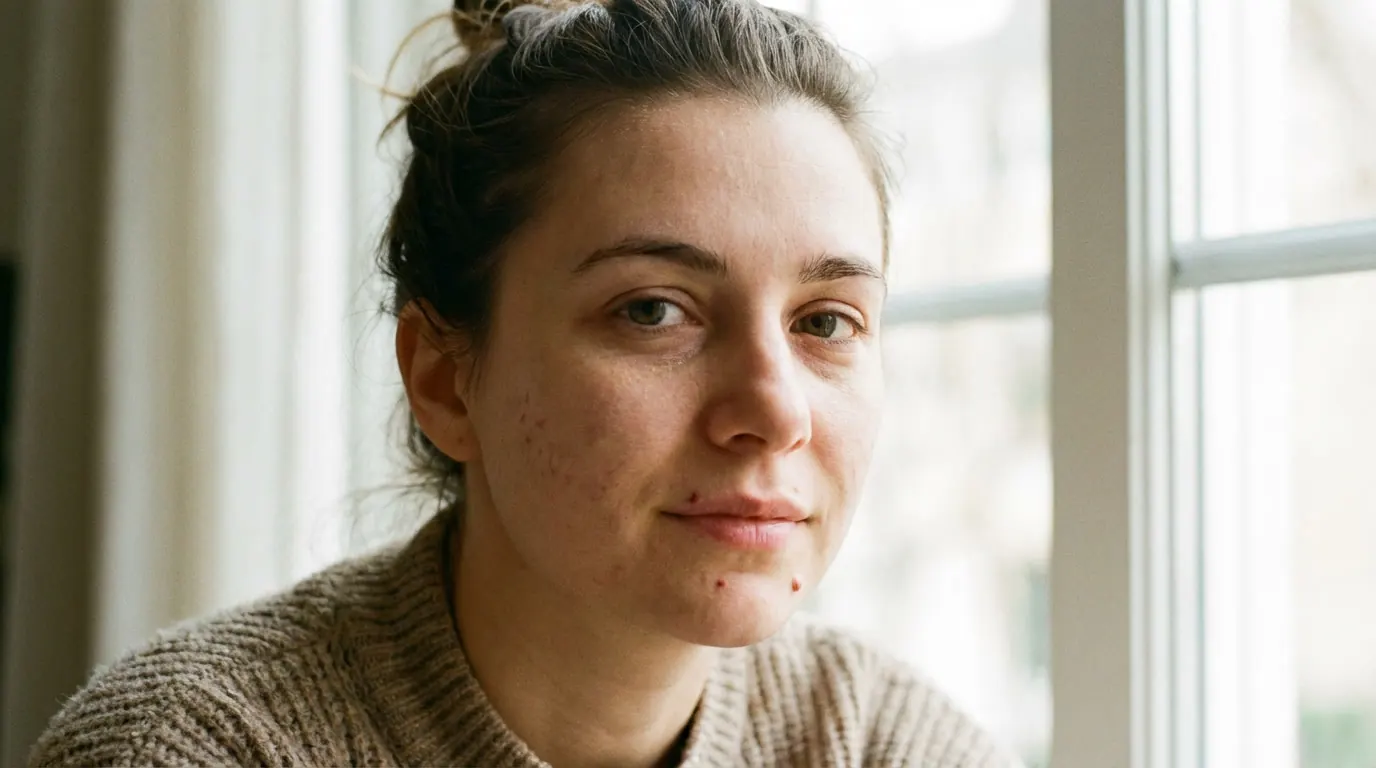
What you see: the face has a history. The small blemish, the slight darkness under the eyes, the uneven lip line - none of them dominate the image, they just confirm a real person lives inside it. This is the shot that makes a testimonial credible before a single word of copy appears.
Pro Tip
The Full Skin Stack
Layer all six into one Subject-slot description - this is the Subject slot from the seven-slot prompt structure, loaded deep:
...natural skin tone variation, visible pores, light freckles scattered
across cheeks, sun-kissed rosy flush on cheekbones, fine skin grain
texture, faint under-eye circles, one small blemish on chin, natural lip
asymmetry, 85mm lens, unretouched editorial beauty photography, shot on
Sony A7R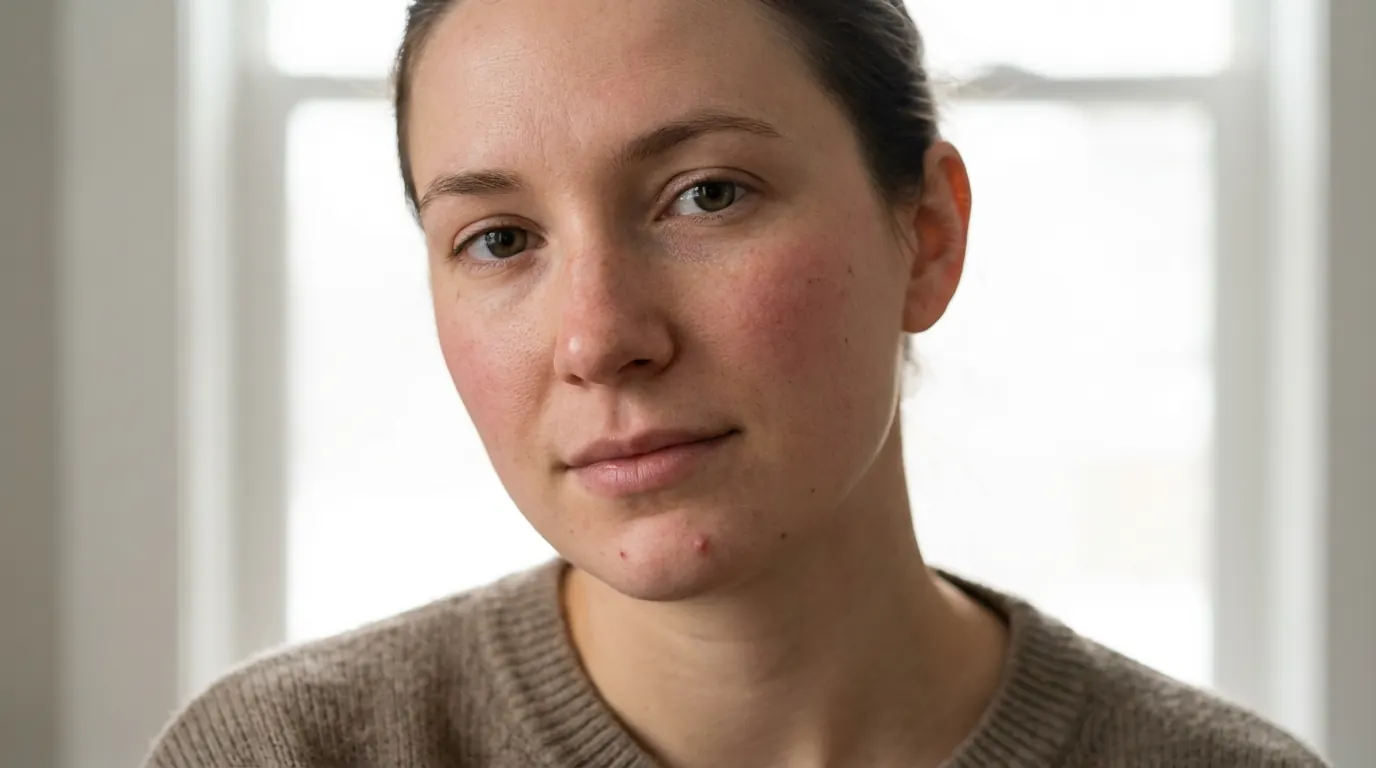
Pair it with the plastic-skin negatives from the negative prompt list - no plastic skin, no airbrushing, no beauty filter - and the face holds together on the first try. The realism vocabulary that sits underneath all of this is in photorealism triggers.
When to Dial It Back
Specificity isn't always the goal. Match the detail to the positioning:
| If the ad is… | Hold back on… |
|---|---|
| Luxury / high-end beauty | freckles, blemishes, visible redness |
| Clinical skincare (redness = problem) | sun-kissed redness |
| Distance / wide lifestyle shot | pores, micro-grain (won't show anyway) |
| Aspirational “perfect result” | imperfection signals |
Luxury / high-end beauty
Hold back on…
freckles, blemishes, visible rednessClinical skincare (redness = problem)
Hold back on…
sun-kissed rednessDistance / wide lifestyle shot
Hold back on…
pores, micro-grain (won't show anyway)Aspirational “perfect result”
Hold back on…
imperfection signals
Everywhere else - UGC, testimonial, natural beauty, outdoor, fitness - stack them.
Conclusion: Specific Beats Perfect
Four things to take with you:
1. Stop idealizing the face. Prettier reads as faker. The Specificity Test rewards particular, not perfect.
2. Variation is the fastest win. Flat, even skin tone is the loudest AI tell - natural skin tone variation fixes more than any single term.
3. Imperfection is a trust asset. On testimonial and real-person creative, the blemish outperforms the flawless. Split-test it and see.
4. Match detail depth to positioning. UGC stacks all six. Luxury dials most of them back.
Here's the triad I keep taped to the monitor: Texture = Proof. Variation = Life. Imperfection = Trust.
So the move: take your best-performing spokesperson prompt and add three details - tone variation, light freckles, one small blemish. Run it against your current version. My bet is the "flawed" face tests better on trust - and you'll never prompt a poreless face again.
Steal my ad concept & hook library
Every prompt, archetype, and hook I use in my own accounts. Updated weekly.
Join the free Skool community