


I've had images with perfect lighting, a great subject, and exactly the right setting - that still looked like renders.
For a long time I couldn't work out why. I'd change the light, swap the location, regenerate the subject. Nothing fixed it.
The problem was the same every time: the space between the objects was too clean.
In the real world, air has particles in it. Surfaces have history on them. The edges of every scene carry the small evidence of a life being lived - the dust mote in a shaft of light, the fine sand at the base of a towel, the coffee ring on the table. None of it is ever the subject. All of it makes the subject believable.
These are the nine grounding elements I prompt to fill those gaps, with the exact keywords and where each one belongs.
Let's add the debris.
Why the Empty Space Gives You Away
A clean render fails not at the subject but in the air and on the surfaces around it. Reality is never that empty.
Reality Debris: The tiny physical byproducts a real camera captures by accident and AI omits by default - dust in a light beam, condensation on cold glass, steam off a coffee, a coffee ring, a fallen petal. None of it is the subject. All of it is proof the scene exists in a physical world where air has weight and surfaces have history. Add one and the scene gains believability; add three and the viewer stops noticing it was generated.
It's the micro-scale partner to the Place Promise and the Lived-In Signals: the scene sets the world, the debris proves it's real.
The 9 Grounding Elements
| Element | What it proves | Use for |
|---|---|---|
| Dust motes | Light direction + occupied space | indoor, directional-light moods |
| Fine sand | A specific beach location | suncare, swimwear, coastal |
| Condensation | Temperature + freshness | food & beverage, fresh skincare |
| Steam / smoke | Heat + “now, not staged” | coffee, food, bath, candles |
| Surface clutter | Time passed, someone lives here | UGC, domestic, relatable |
| Botanical debris | Living things in the space | organic beauty, wellness |
| Ground texture | The scene is located, not floating | outdoor, gardening |
| Light leaks / artifacts | Real glass, a real camera | UGC, film aesthetic, heritage |
| Weather | Season + a felt physical memory | seasonal, outdoor, atmospheric |
Dust motes
What it proves
Light direction + occupied spaceUse for
indoor, directional-light moodsFine sand
What it proves
A specific beach locationUse for
suncare, swimwear, coastalCondensation
What it proves
Temperature + freshnessUse for
food & beverage, fresh skincareSteam / smoke
What it proves
Heat + “now, not staged”Use for
coffee, food, bath, candlesSurface clutter
What it proves
Time passed, someone lives hereUse for
UGC, domestic, relatableBotanical debris
What it proves
Living things in the spaceUse for
organic beauty, wellnessGround texture
What it proves
The scene is located, not floatingUse for
outdoor, gardeningLight leaks / artifacts
What it proves
Real glass, a real cameraUse for
UGC, film aesthetic, heritageWeather
What it proves
Season + a felt physical memoryUse for
seasonal, outdoor, atmospheric
1. Dust Motes & Airborne Particles
Tiny particles suspended in a beam - visible only where a shaft of sunlight or focused light cuts through a dim space. One of the most powerful single grounding elements there is, because it makes the air itself visible.
Use for: indoor lifestyle with directional light, morning-routine content, cozy interiors where the quality of light is the mood. Avoid when: the creative needs clinical cleanliness - dust in a medical or hygiene context fights the message.
dust motes in shaft of light
airborne particles visible in sunbeam
floating dust caught in window light
dust motes suspended in morning light
What you see: the shaft has texture - not a clean beam but a volume of air made visible. Some particles are bright points, others soft and larger. It confirms the light direction and that the room's been lived in. Air this visible is air that's been breathed.
2. Fine Sand & Beach Debris
The specific texture of sand - dry and fine at the top of the beach, compacted at the waterline, clinging to skin or collecting at the base of a product. One of the fastest ways to place a scene at a specific outdoor location.
Use for: beach and coastal lifestyle, summer campaigns, suncare and SPF, swimwear, outdoor wellness. Avoid when: there's no connection to outdoors - sand in an indoor context reads as an error, not a detail.
fine dry sand texture on surface
sand clinging to skin, beach detail
sand at base of product, beach context
sand grains on skin, close-up detail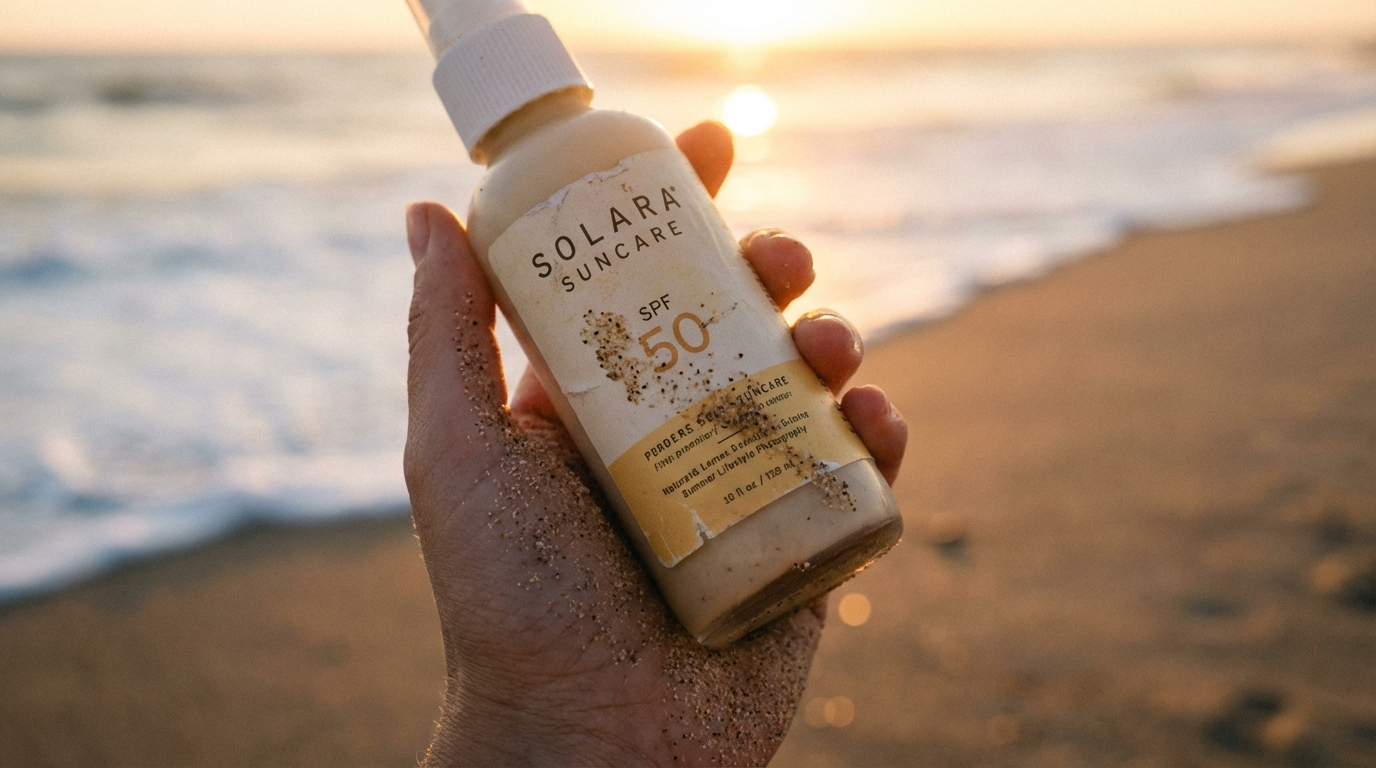
What you see: a few grains stuck to the palm, a little collected where the fingers meet, a small scatter on the product label. The sand confirms she was sitting on the beach before picking the product up. Not a studio shot with a beach backdrop - someone at a beach.
3. Morning Condensation & Water Droplets
Moisture on surfaces - condensation on a cold glass, droplets on a product from the fridge, dew, residual moisture on freshly washed skin. It confirms temperature difference, recent activity, and the physical properties of the objects.
Use for: food and beverage, skincare on freshly washed skin, morning-routine content, any creative where freshness is a brand value. Avoid when: the creative calls for warmth and dryness - droplets on a comfort product are a tonal mismatch.
condensation on glass, water droplets
water droplets on cold product surface
condensation beading on glass bottle
water droplets on skin, fresh and clean
What you see: droplets at different stages - some forming, some large enough to run. More condensation below the liquid line than above. A small moisture ring at the base confirms it's been sitting long enough to drip. Temperature confirmed without a thermometer.
4. Steam & Smoke
Visible vapor from a hot surface - steam off a coffee, a bowl, a bath; smoke from a candle. It confirms temperature, confirms the moment is now rather than staged, and adds motion to a static scene.
Use for: food and beverage, morning routine, wellness and bath products, candles and home fragrance. Avoid when: the creative needs to feel cool or fresh - steam is warm by nature and shifts the register to slow and domestic.
steam rising from coffee cup
thin wisp of steam, hot beverage
candle smoke, thin trail rising
bath steam, warm vapour rising
What you see: the steam rises in one thin column before dispersing, catching side light - without the directional light it'd be invisible, so its visibility confirms both the light direction and the heat. The curl is never identical twice.
5. Environmental Clutter & Surface History
The small objects and marks that prove a surface has been used - a coffee ring, a pen by a notebook, crumbs at a plate's edge, a charging cable. These separate a lived-in environment from a staged one.
Use for: domestic lifestyle, UGC content, relatable everyday advertising. Avoid when: the creative needs clinical cleanliness or premium minimalism - clutter undermines luxury aspiration.
coffee ring mark on wooden table
pen beside open notebook, desk detail
crumbs at edge of plate, meal evidence
charging cable on counter, domestic detail
What you see: the ring mark isn't from today - it's from yesterday. The pen was put down mid-thought. Crumbs confirm a meal happened here. None of it is the subject, but all of it confirms someone uses this table every morning. This is the surface-level version of the Lived-In Signals.
6. Pollen, Petals & Botanical Debris
Small organic matter on a surface - fallen petals, pollen dust, a dried leaf, scattered herbs. The natural equivalent of surface clutter: evidence that living things exist in the space. Visually beautiful, and it signals natural, artisan, or wellness positioning.
Use for: natural and organic beauty, wellness, botanical skincare, home fragrance. Avoid when: the creative needs clinical cleanliness or contemporary minimalism.
fallen flower petals on surface
pollen dust on shelf beside plant
dried lavender scattered on surface
leaf debris at base of plant, natural
What you see: the petals aren't arranged - they fell from the vase at the frame's edge where gravity put them. A faint yellow-orange pollen dust sits near the pot. These are details a studio would clean away; their presence confirms a real shelf in a real space.
7. Soil & Natural Ground Texture
The texture of outdoor ground - dry cracked earth, damp forest soil, real grass variation, gravel with gaps. The foundation every outdoor scene rests on; its accuracy decides whether the scene feels located or floating.
Use for: outdoor lifestyle, gardening and home content, natural beauty around earth and nature. Avoid when: the creative is interior-only or the ground isn't relevant.
dry cracked earth texture, outdoor ground
damp forest soil, dark and organic
real grass texture, natural variation
gravel path, stones with natural gaps
What you see: a specific dryness - the surface cracked in an irregular pattern, raking light picking up every ridge. Fine dust at the foot-contact points confirms the earth is dry enough to disturb. Raking light is doing the same job here as in realistic AI shadows.
8. Light Leaks & Lens Artifacts
The imperfections real glass introduces - a faint light leak at the frame edge, mild flare, the vignette of a fast prime, a hair of chromatic aberration. The fingerprints of a real camera. Used subtly, one of the fastest render-to-photo moves.
Use for: UGC content, film-aesthetic creative, vintage or heritage brands. Avoid when: the creative needs clinical sharpness - artifacts fight premium product-accurate photography.
subtle light leak at frame edge
natural vignette, fast prime lens
slight chromatic aberration on edges
film-style light leak, warm tone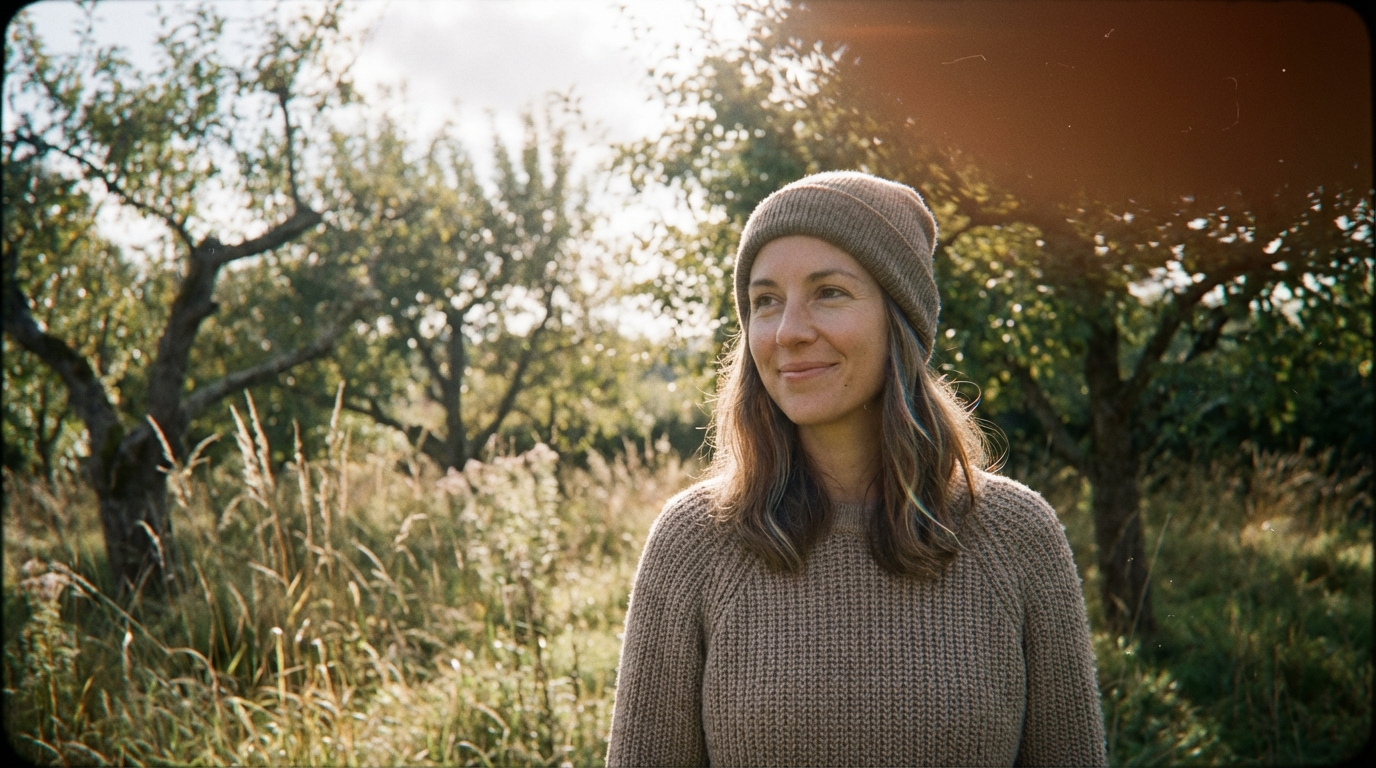
What you see: a faint warm orange wash in the upper corner where a camera body let in stray light. The frame edges darken slightly - a fast lens's natural vignette. A hair of color fringing on the sharpest contrast edge. This overlaps directly with the optical fingerprints, used here as a grounding detail.
9. Weather & Atmospheric Conditions
The visual evidence of weather - raindrops on a window, misted breath, heat haze, fog softening distant objects, wind in hair. The most powerful environmental grounding element, because weather is experienced, not just seen. A viewer who's stood in light rain has a physical memory the image activates.
Use for: seasonal creative, outdoor lifestyle with an atmospheric register, any ad that signals the time of year. Avoid when: the creative needs to be seasonally neutral, or the weather conflicts with the message.
raindrops on window glass, rainy day
visible breath in cold air, winter morning
morning fog, distant objects softened
wet pavement after rain, reflections
What you see: raindrops in the foreground - some running, some still. Through them the street is visible but doubly blurred by glass and rain. The interior is warm, the exterior grey and wet. That inside/outside contrast is the entire emotional content. The viewer is warm; the street is not.
The Full Grounding Elements Stack
Grounding details thread through the whole prompt - in the air, on the surfaces, at the edges:
Morning interior lifestyle shot, woman at a wooden kitchen table with a
ceramic coffee mug, thin wisp of steam rising and catching a shaft of
morning window light with dust motes floating in it, a faint coffee ring on
the table from yesterday, a fallen petal from a small vase at the frame
edge, a condensation droplet on the cold glass of juice beside the coffee, a
charging cable at the back edge of the table, warm morning color, gentle
lens vignette at the edges, 35mm lens, candid domestic lifestyle photography
Steam, dust, a coffee ring, a petal, condensation, clutter, a vignette - each confirms a different dimension of reality (temperature, time, occupancy, optics). Together the viewer doesn't question the scene for a single frame.
Conclusion: Photograph the Debris, Not Just the Subject
Four to lock in:
1. The gap between objects is the tell. Perfect lighting and a great subject still render if the air and surfaces are too clean. Reality is never that empty.
2. Add one, then three. One grounding element makes a scene more believable. Three and the viewer stops noticing it was generated at all.
3. Each element proves a different thing. Steam proves heat, condensation proves temperature, dust proves light direction, clutter proves time. Pick the ones your scene should prove.
4. It's never the subject. The dust, the ring, the fallen petal - the things you didn't come to photograph are exactly what make the thing you did come to photograph real.
The rule of thumb that closes the module: the details that make a scene feel real are never the things you came to photograph. They're the dust in the light, the mark left by the cup, the petal that fell while nobody was looking. Add three and the viewer stops noticing the image was generated at all.
So the move: take your most "perfect but somehow fake" scene and add three - steam off the coffee, dust in the window light, a coffee ring on the table. Same shot. My bet is it finally stops looking rendered - because you filled the empty space reality never leaves clean.
Steal my ad concept & hook library
Every prompt, archetype, and hook I use in my own accounts. Updated weekly.
Join the free Skool community