AI gives you three faces.
The toothpaste-commercial smile - every tooth showing, frozen at peak happiness. The perfume-ad smoulder. And the hostage-photo neutral, where the model looks vaguely worried about something off-frame.
All three are poses. Held, performed, symmetrical. And your viewer clocks all three as fake in under a second, because real faces don't hold expressions - they move through them.
That's the whole fix, and it's the thing I never once prompted for in my first year.
These are the eight expression and gaze states I use to make an AI face read as a moment your camera caught, not a pose your model struck. When to use each, when to avoid it, and the exact keywords.
Let's un-freeze the face.
Why AI Expressions Look Fake
The defaults are the problem. Left alone, the model reaches for one of its three held poses every time.
The Micro-Event: Every convincing expression is a face caught mid-event - just finishing a laugh, about to speak, glancing down at a product - not a held emotion. Prompt the event, not the feeling. "Happy" gives you a pose. "Just finished laughing" gives you a moment.
That reframe changes how you write every face.
You stop prompting emotions ("happy," "serious," "calm") and start prompting events ("mid-laugh, about to speak," "looking down at the product in her hands"). The eight states below are eight kinds of micro-event. The same fight plays out in realistic AI skin and realistic AI hair.
The 8 Expression & Gaze States
At a glance, before the breakdowns:
| State | What it creates | Lead prompt term |
|---|---|---|
| Relaxed neutral | Composed, editorial calm | relaxed neutral expression, soft mouth |
| Natural smile | Warm, approachable, sincere | slight asymmetric smile, eyes crinkling |
| Mid-expression | Candid, caught-on-video feel | mid-laugh, mouth slightly open |
| Averted gaze | Observed, private moment | eyes cast downward, looking at product |
| Contemplative | Internal, thoughtful state | soft contemplative expression, gaze inward |
| Eyes-closed | Sensory experience | eyes gently closed, relaxed mouth |
| Direct gaze | Trust, connection | soft direct eye contact, open and warm |
| Laugh lines | Earned, real expression | natural laugh lines, crow's feet present |
Relaxed neutral
What it creates
Composed, editorial calmLead prompt term
relaxed neutral expression, soft mouthNatural smile
What it creates
Warm, approachable, sincereLead prompt term
slight asymmetric smile, eyes crinklingMid-expression
What it creates
Candid, caught-on-video feelLead prompt term
mid-laugh, mouth slightly openAverted gaze
What it creates
Observed, private momentLead prompt term
eyes cast downward, looking at productContemplative
What it creates
Internal, thoughtful stateLead prompt term
soft contemplative expression, gaze inwardEyes-closed
What it creates
Sensory experienceLead prompt term
eyes gently closed, relaxed mouthDirect gaze
What it creates
Trust, connectionLead prompt term
soft direct eye contact, open and warmLaugh lines
What it creates
Earned, real expressionLead prompt term
natural laugh lines, crow's feet present
Now the detail.
1. Relaxed Neutral Gaze
A face at rest - not smiling, not emoting, simply existing. Mouth slightly soft, eyes on something in the middle distance rather than drilling into the lens.
This is the hardest state to get without prompting, because "neutral" defaults to either blank or tense.
Use for: premium and luxury ads, editorial beauty, product-forward shots where the face is supporting content. Avoid when: you need warmth - neutral reads as cool and composed, an asset or a liability depending on the brand.
relaxed neutral expression, soft mouth
eyes focused on middle distance, not at camera
calm resting face, no forced expression
serene expression, natural jaw relaxed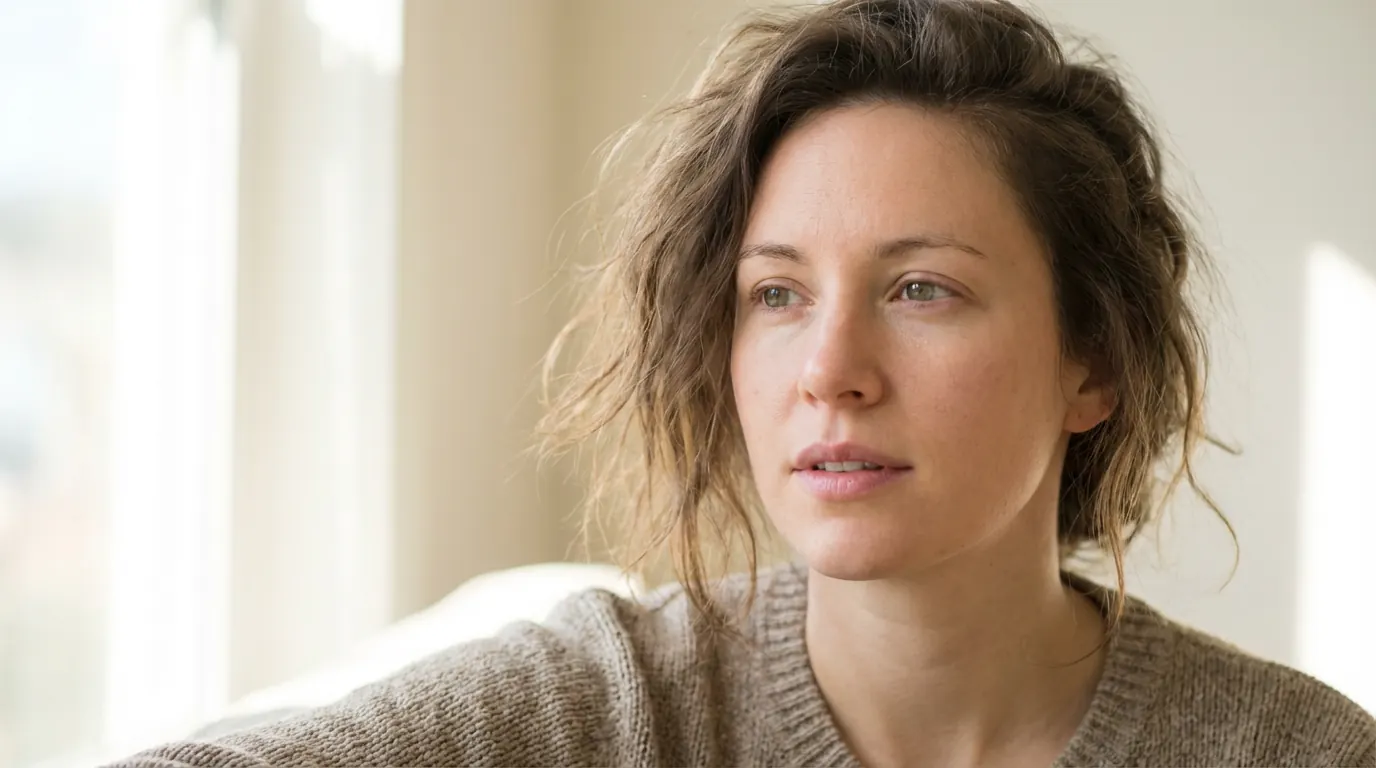
What you see: the mouth hasn't committed to a smile or a frown. The eyes are present but not performing. Composed, not posed.
2. Relaxed Natural Smile
A smile that arrived rather than was placed - slightly asymmetric, eyes involved, cheeks lifting naturally. The opposite of the AI full-tooth smile frozen at peak happiness.
Use for: lifestyle ads, testimonials, approachable positioning, before/after reveals, any "happy outcome" moment. Avoid when: the creative needs seriousness, luxury restraint, or a problem-state hook.
relaxed natural smile, not posed
slight asymmetric smile, genuine expression
soft smile with eyes crinkling naturally
mouth corners lifted naturally, candid expression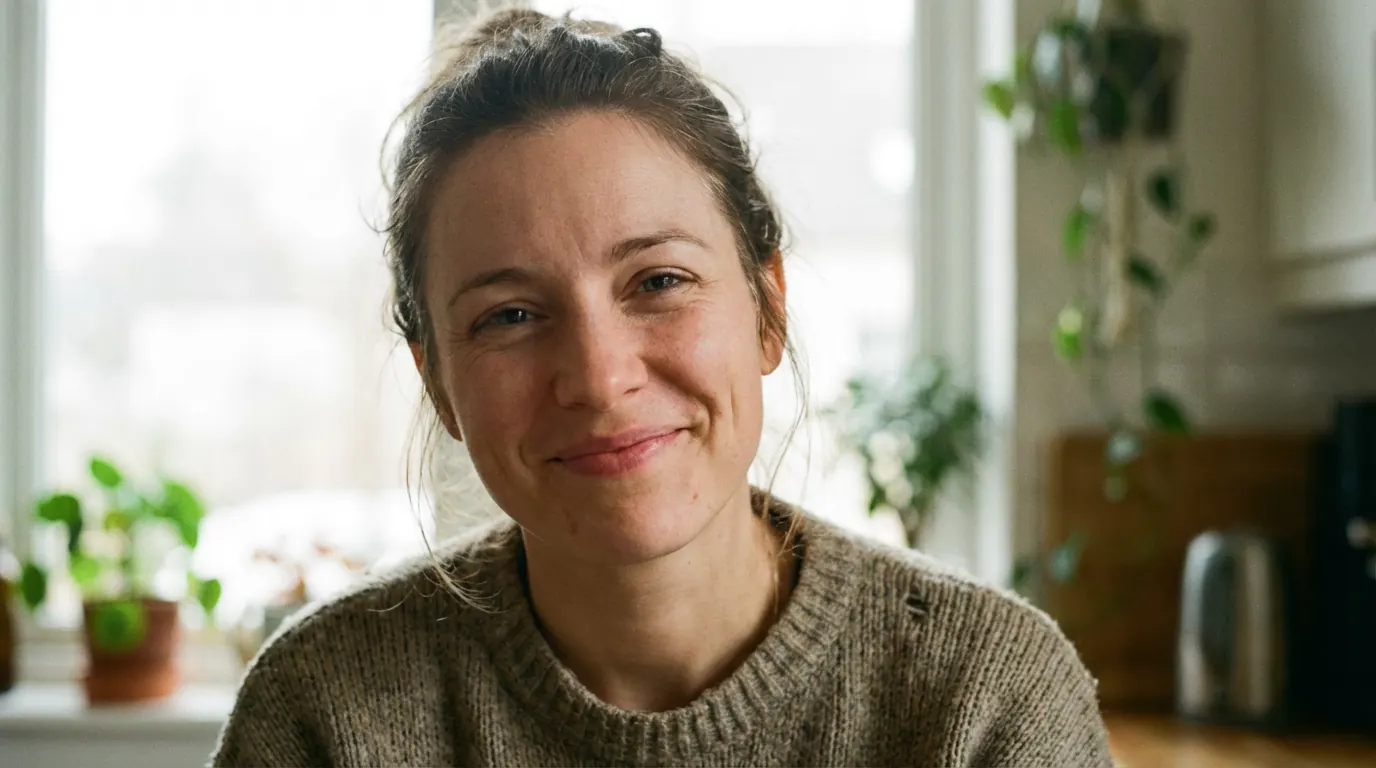
What you see: one corner slightly higher than the other. The eyes narrow with the cheek lift. The face looks like it's reacting to something, not holding a pose.
3. Mid-Expression (The Caught Moment)
A face captured between expressions - finishing a laugh, about to speak, reacting to something off-camera.
This is the single most powerful state for UGC, because it signals the camera caught something instead of staging it. It's The Micro-Event in its purest form.
Use for: UGC hooks, testimonial ads, reaction shots, any ad that needs to feel candid. Avoid when: product-forward shots where the face supports rather than leads, or controlled editorial.
mid-laugh expression, mouth slightly open
laugh mid-sentence, natural candid expression
just finished laughing, residual smile
reacting to something off camera, genuine surprise
transitional expression, between neutral and smile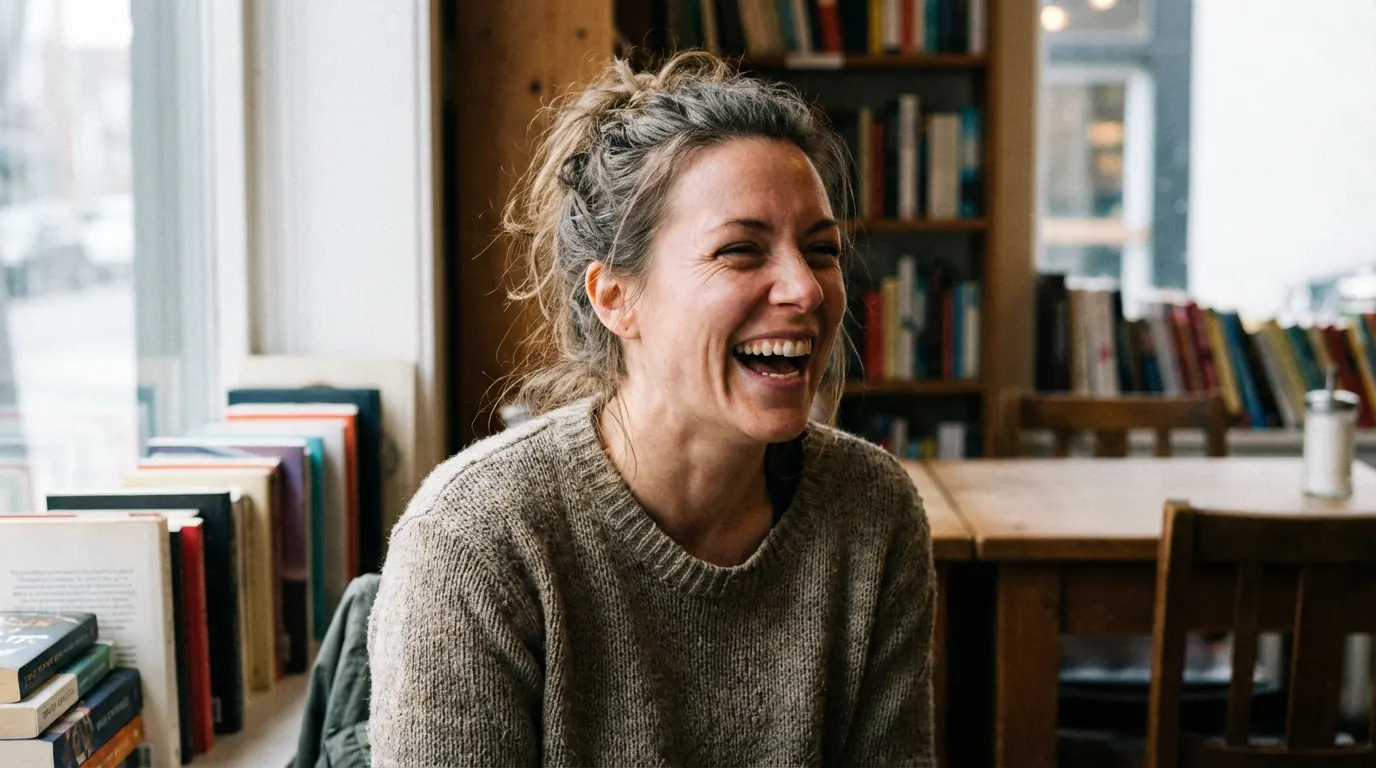
What you see: the mouth is open but not performing. The eyes are partly closed from real muscle engagement. It looks pulled from a video, not set up as a shot.
4. Downward / Averted Gaze
Eyes directed down - at a product, at hands, at something in the scene - rather than at the camera. This removes the "I'm being photographed" dynamic entirely.
Use for: product-interaction shots, routine and process content, intimate moments, any shot where the viewer should observe rather than connect. Avoid when: you need direct connection or spokesperson energy - averted gaze cuts the subject-viewer relationship.
eyes cast downward, looking at product in hands
averted gaze, looking slightly off to the side
downward glance, natural eyelid position
looking down at object, unaware of camera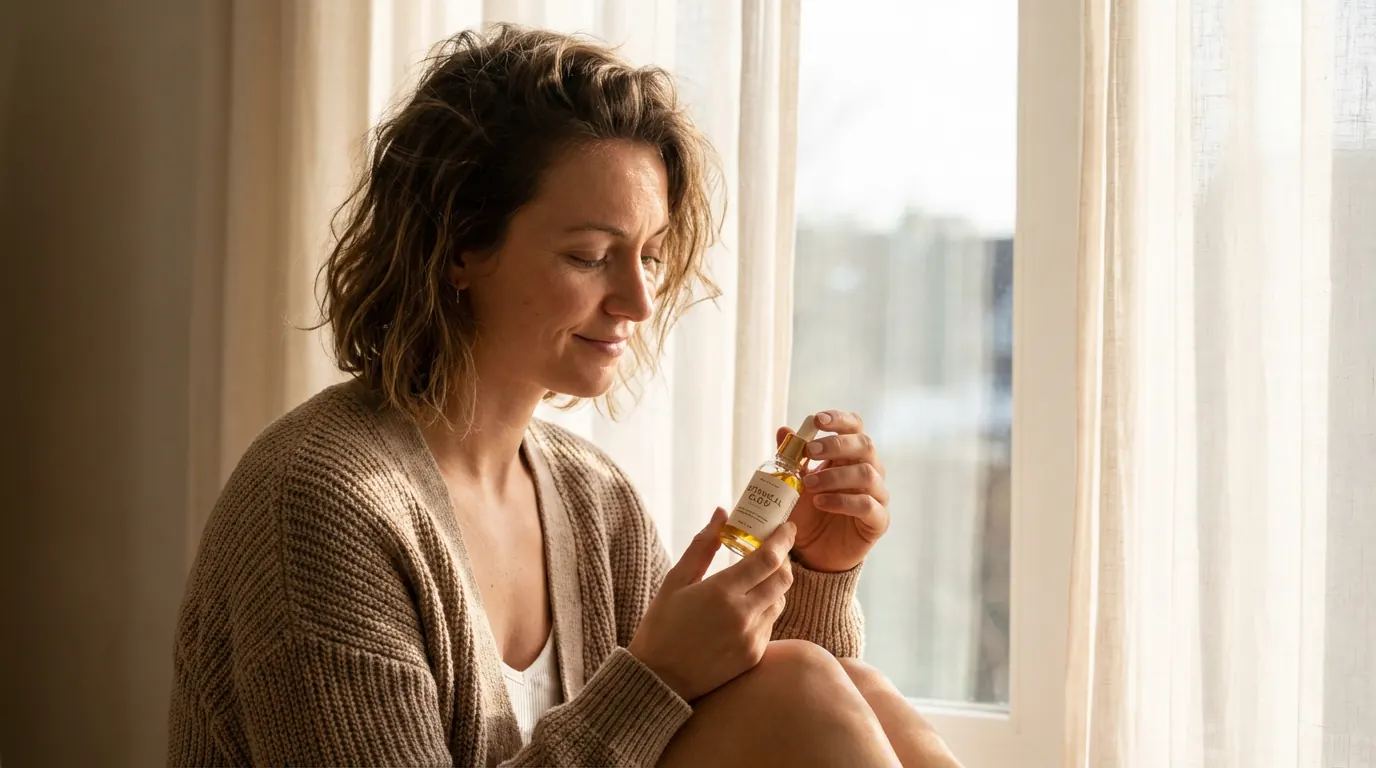
What you see: the camera is watching someone who isn't watching back. The viewer becomes an observer of a private moment instead of an audience for a performance.
5. Soft Contemplative Expression
Slightly unfocused eyes, a mouth that's neither smiling nor neutral - the face of someone processing or simply being present. Common in real life, almost never in AI output without prompting.
Use for: wellness, mindfulness, mental-health-adjacent products, journaling and supplement ads - any category where the emotional state is internal. Avoid when: the ad needs energy, action, or direct engagement.
soft contemplative expression, eyes slightly unfocused
thoughtful look, gaze directed inward
pensive expression, soft mouth, quiet energy
introspective gaze, natural and unperformed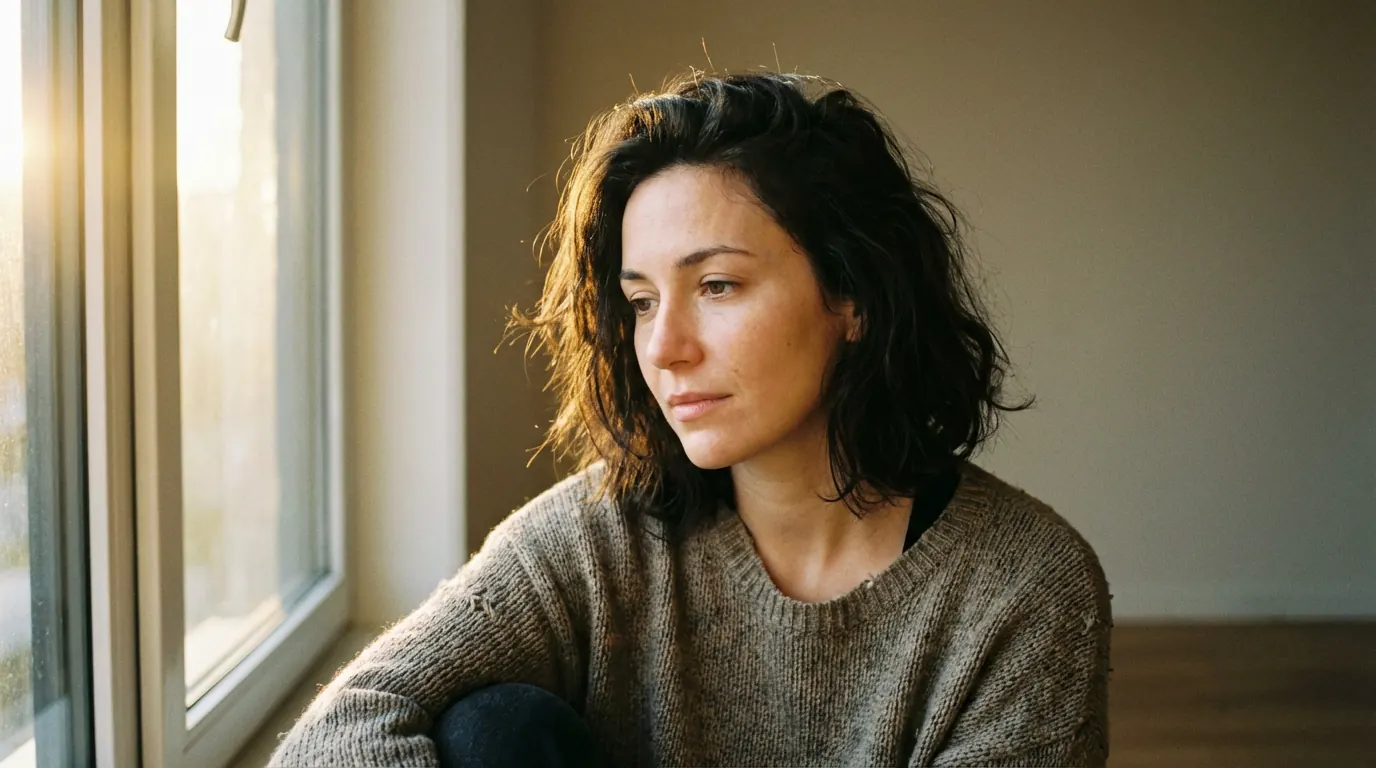
What you see: eyes open but not focused on anything in the frame. Mouth fully relaxed. An internal state rather than a performed one - someone thinking, not posing.
6. Eyes-Closed Expression
Eyes fully closed - gently, not squeezed - with a neutral or slightly positive expression. Signals sensory experience: applying a product, feeling warmth, a moment of calm.
Use for: skincare application, aromatherapy, spa-adjacent products, "sensory experience" creative. Avoid when: the ad needs presence and connection - closed eyes remove the subject from the viewer's world.
eyes gently closed, relaxed mouth position
eyes closed in quiet enjoyment, not forced
softly closed eyes, relaxed face
eyes closed while applying product, sensory expression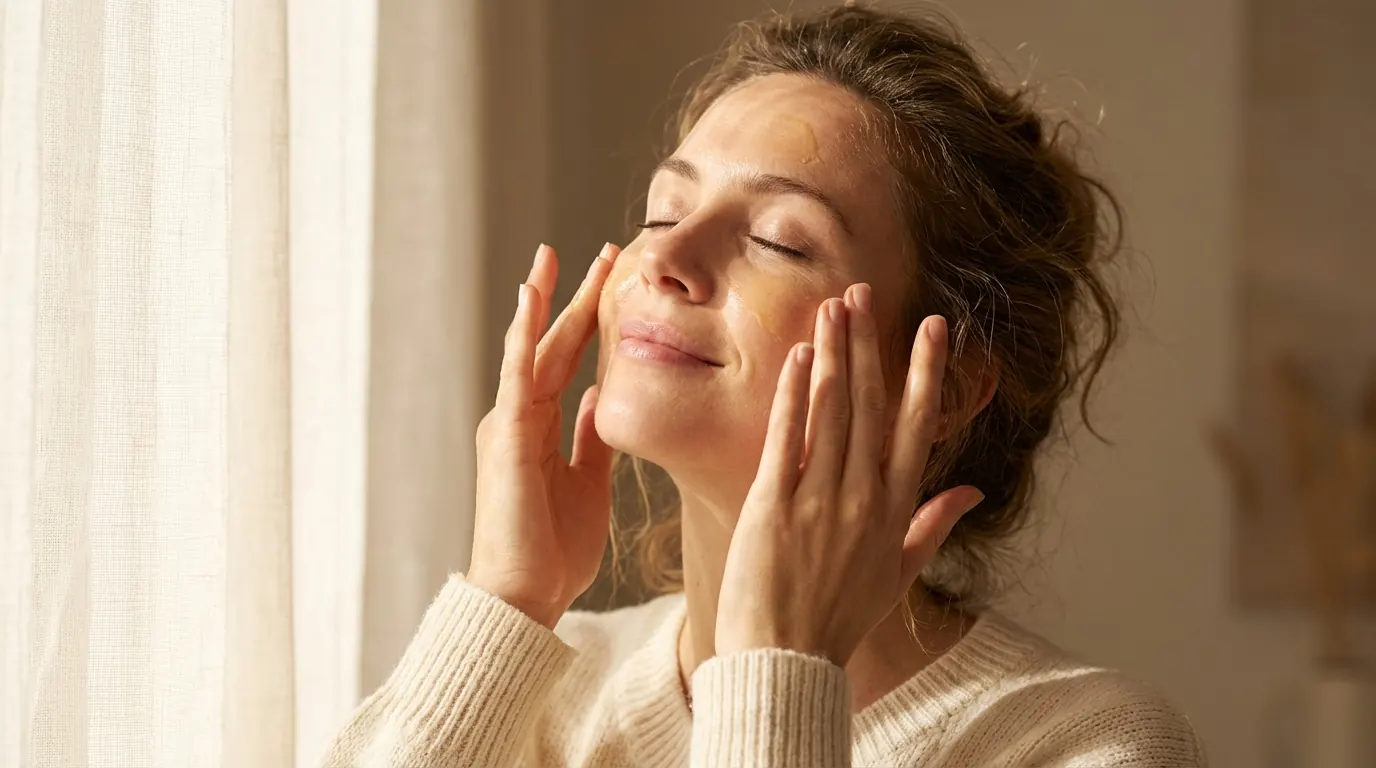
What you see: the eyelids are soft, not pressed. The fingertips on skin confirm the closed eyes are a reaction, not a pose.
7. Direct Camera Gaze (Unintimidating)
Eye contact without aggression, intensity, or performance - calm, open, present. AI defaults direct gaze to either vacant or challenging. This is the rare third option: simply seen.
Use for: spokesperson ads, testimonial looks, trust-building and direct-response creative where connection is job one. Avoid when: the subject shouldn't be aware of the camera - product interaction, candid lifestyle.
direct soft eye contact with camera, open and warm
looking directly at lens, calm and present
unforced direct gaze, no intensity, relaxed brow
gentle direct look, soft and approachable
What you see: eyes on the lens with no performance in them. The brow is relaxed - no furrow, no raised arches. The contact of someone who has something real to say, not something to sell.
8. Laugh Lines & Expression Marks
The physical evidence of expression - crow's feet when eyes crinkle, nasolabial folds that deepen in a real smile, forehead lines from a raised brow. AI smooths these away by default, which is exactly why its smiles look painted on.
Use for: any close-up expression shot, mature-demographic targeting, trust and authenticity creative. Avoid when: the brand's language is aspirational polish where these details would clash.
natural laugh lines visible, crow's feet present
nasolabial folds visible in smile, natural
forehead expression lines, natural movement
smile creases, unretouched expression marks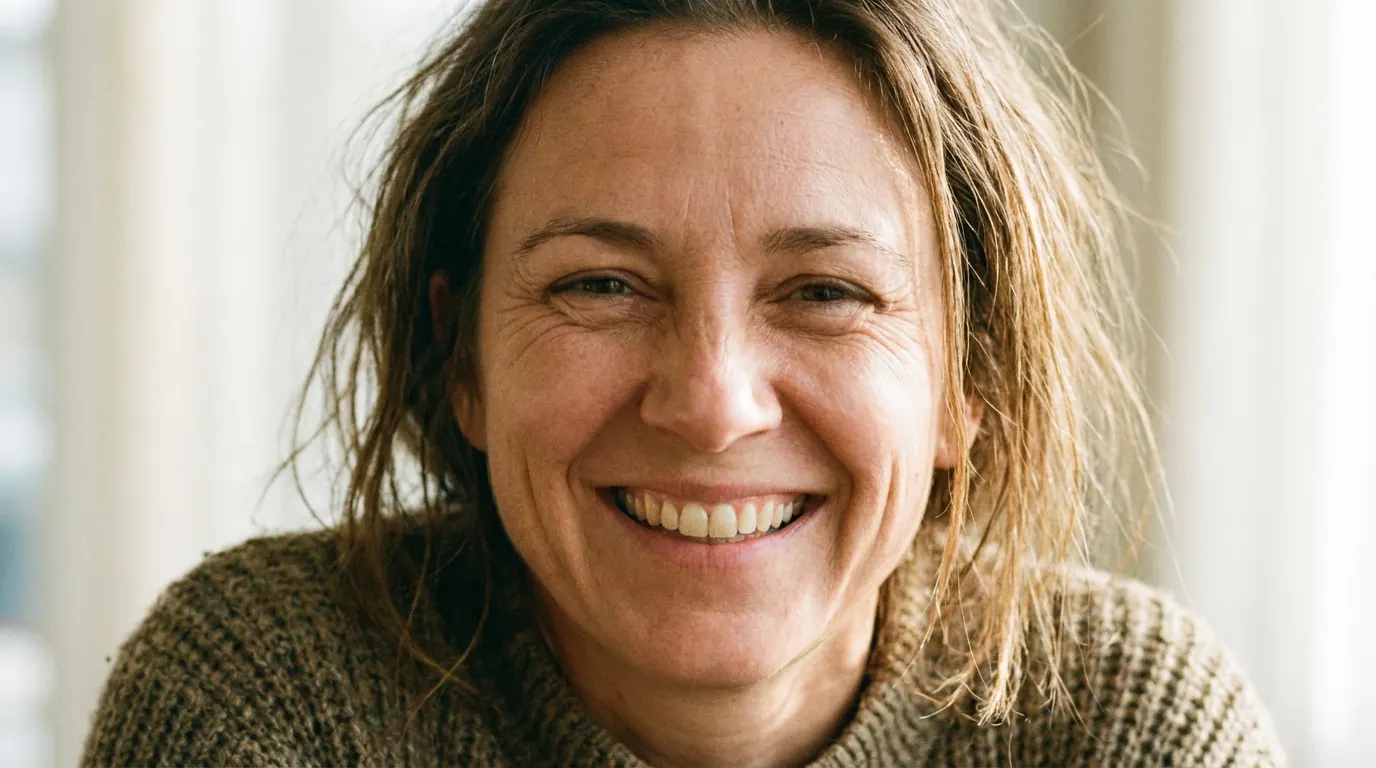
What you see: the fine lines that only appear when a smile is real. The folds beside the mouth deepen with the expression. The face has earned it - you can see the muscles that made it.
Note
no airbrushing, no plastic skin from the negative prompt list.The Full Expression Realism Stack
Loaded into the Subject and Action slots of the seven-slot prompt structure:
...relaxed natural smile, slight asymmetry, eyes crinkling, nasolabial
folds visible, completely candid and expressive, reacting to something off
camera, natural side light, 50mm lens, natural candid moment, unretouched
lifestyle photography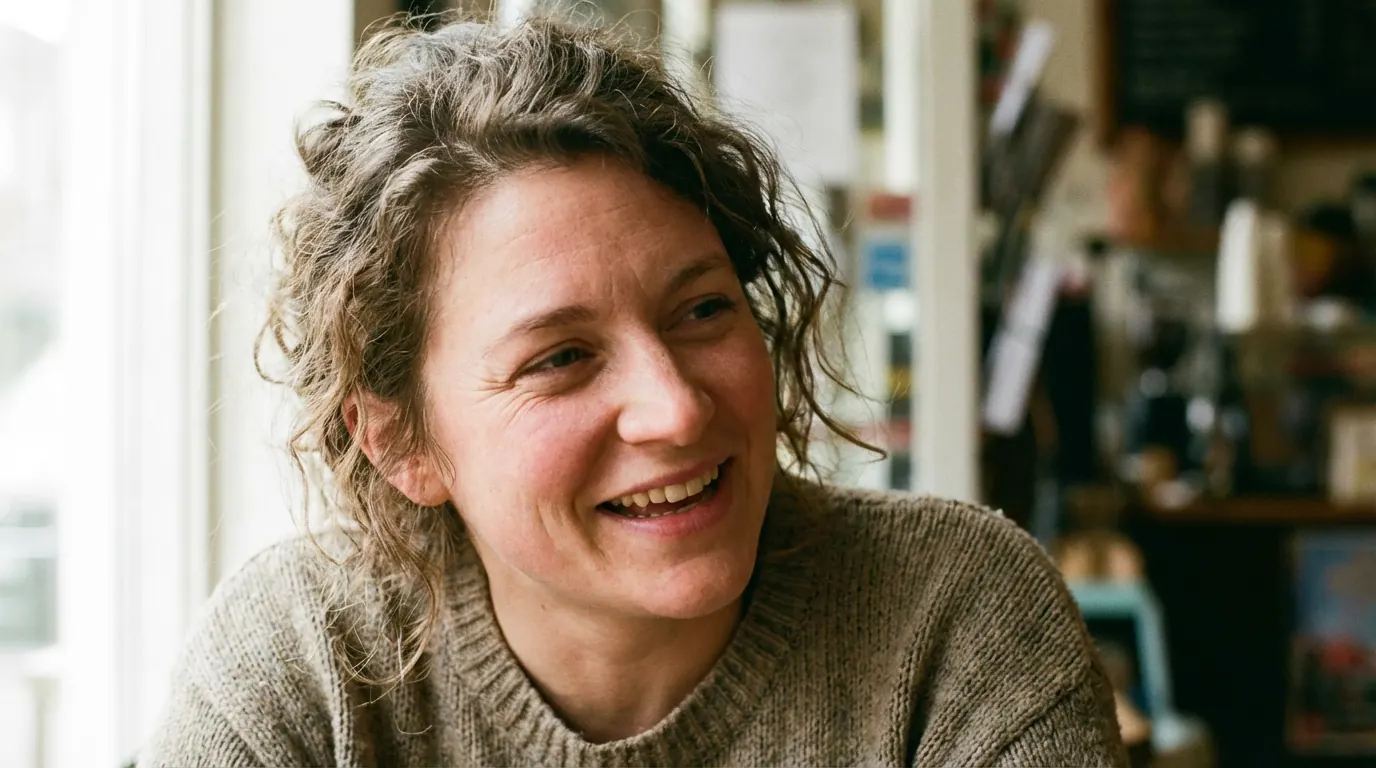
Match the Gaze to the Job
Gaze direction decides the relationship between subject and viewer. Pick it by what you want the viewer to do:
| You want the viewer to… | Use this gaze |
|---|---|
| Connect / trust the spokesperson | Direct camera gaze (unintimidating) |
| Observe a private moment | Downward / averted gaze |
| Feel the product experience | Eyes-closed |
| Read an internal, calm state | Soft contemplative |
| Feel the candid, caught energy | Mid-expression |
Connect / trust the spokesperson
Use this gaze
Direct camera gaze (unintimidating)Observe a private moment
Use this gaze
Downward / averted gazeFeel the product experience
Use this gaze
Eyes-closedRead an internal, calm state
Use this gaze
Soft contemplativeFeel the candid, caught energy
Use this gaze
Mid-expression
Get the gaze wrong and the whole ad's psychology inverts - a product-interaction shot with direct eye contact suddenly feels staged.
Conclusion: Prompt the Moment, Not the Mood
Four to lock in:
1. Emotions are poses. Events are moments. Stop prompting "happy" - prompt "just finished laughing." That's The Micro-Event, and it's the whole game.
2. Asymmetry is the tell you want. A perfectly symmetric expression is always a pose. One corner higher, eyes involved - that's real.
3. Gaze sets the relationship. Direct for connection, averted for observation. Choose it deliberately, not by default.
4. Let the face show its work. Laugh lines and crow's feet are proof the expression is real. Smoothing them is what makes AI smiles look painted on.
The triad I keep with the skin and hair ones: Symmetry = Pose. Averted = Observed. Mid-expression = Caught.
So the move: take a spokesperson prompt where you wrote "smiling" and swap it for "just finished laughing, slight asymmetric smile, eyes crinkling, natural laugh lines." Run both. My bet is the caught version stops the scroll - because it looks like a person mid-life, not a model mid-pose.
Steal my ad concept & hook library
Every prompt, archetype, and hook I use in my own accounts. Updated weekly.
Join the free Skool community