


Every material in the real world has a history.
A leather bag has been used. A wooden table has taken ten thousand cups of coffee. A pair of jeans has bent at the knee and faded at the thigh. And for a long time, every object in my AI ads came out looking like it had left the factory five seconds before the shot - flawless, uniform, brand new.
That factory-fresh look is a tell. Real objects carry the visible record of their own use, and that record is exactly what AI strips away by default.
Materials aren't a single texture either. Leather scuffs one way, metal brushes another, wood grains a third, denim fades in specific places. Get the wear right and the object reads as owned. Get it generic and it reads as a 3D asset.
These are the nine material wear details I prompt to give objects a history, with the exact keywords for each.
Let's age the materials.
Why Brand New Is the Tell
A rendered object has no past. It's perfect because nothing has happened to it yet - and nothing happening to it is precisely what marks it as unreal.
Earned Wear: Every real material carries the visible record of its own use - the scuff on a leather corner, the fade at a jean's knee, the patina on brass, the grain worn smooth where hands rest. That record of time and use is what separates an object someone owns from an object a renderer made this morning. AI defaults to brand new; wear is what you add to make it real.
It's the material cousin of the wear-and-history rule in fabric and the Reality Debris principle: the object doesn't just exist in the scene, it has been lived with.
The 9 Material Wear Details
At a glance:
| Material | The wear that ages it | Use for |
|---|---|---|
| Leather | Scuffs, patina, softening | bags, wallets, premium goods |
| Brushed metal | Directional grain, fingerprints | appliances, tech, watches |
| Wood grain | Grain, ring marks, worn edges | furniture, F&B, heritage |
| Distressed denim | Fades at stress points | apparel, casual, streetwear |
| Raw wood | Saw marks, splinters, texture | craft, artisan, natural |
| Scuffed metal | Scratches, oxidation, dents | industrial, tools, rugged |
| Matte ceramic | Uneven glaze, kiln variation | homeware, coffee, artisan |
| Worn paint | Chips, peeling, fade | vintage, heritage, character |
| Polished finish | Depth, reflection, micro-wear | luxury, premium furniture |
Leather
The wear that ages it
Scuffs, patina, softeningUse for
bags, wallets, premium goodsBrushed metal
The wear that ages it
Directional grain, fingerprintsUse for
appliances, tech, watchesWood grain
The wear that ages it
Grain, ring marks, worn edgesUse for
furniture, F&B, heritageDistressed denim
The wear that ages it
Fades at stress pointsUse for
apparel, casual, streetwearRaw wood
The wear that ages it
Saw marks, splinters, textureUse for
craft, artisan, naturalScuffed metal
The wear that ages it
Scratches, oxidation, dentsUse for
industrial, tools, ruggedMatte ceramic
The wear that ages it
Uneven glaze, kiln variationUse for
homeware, coffee, artisanWorn paint
The wear that ages it
Chips, peeling, fadeUse for
vintage, heritage, characterPolished finish
The wear that ages it
Depth, reflection, micro-wearUse for
luxury, premium furniture
Now the detail.
1. Scuffed & Worn Leather
Leather that's been used - creases at the fold points, slight scuffing on the edges and corners, a patina that has developed unevenly at the areas of most contact. Darkening and softening where hands land, while less-touched areas hold more of the original color. Leather reads specific and directional: it wears where the object meets the world.
- Use
- Premium accessories, daily-carry lifestyle products, heritage brand positioning, any creative where the object should feel chosen and lived with.
- Avoid
- The product is brand new and flawless is the hero position - wear signals age, an asset for heritage and a liability for new launches.
worn leather, natural patina
scuffed leather edges, daily use marks
leather crease lines at fold points
softened leather, uneven contact patina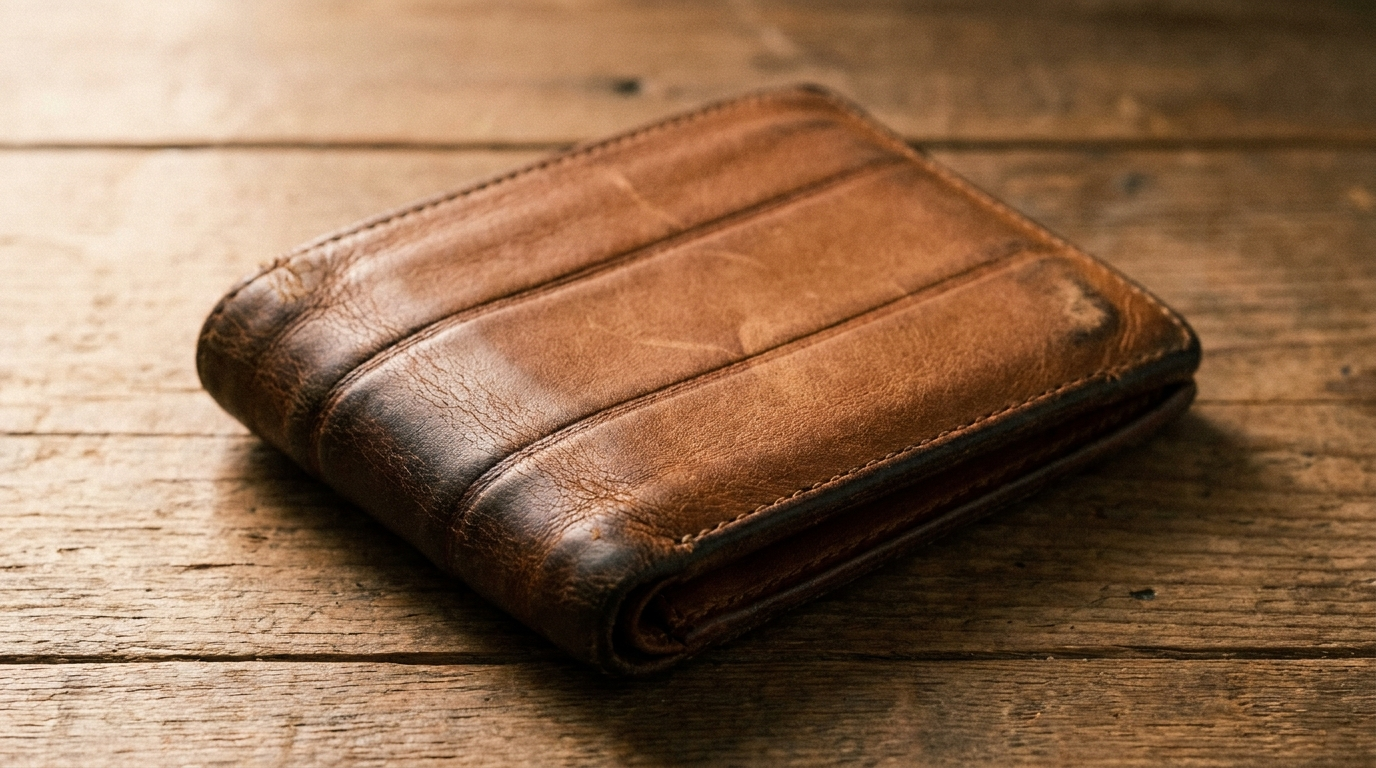
What you see: the creases where the leather bends are darkest and most permanent. The corners show the rounded scuffing of an object that's been in and out of a bag daily. The patina is uneven in the way real leather ages - darkening where hands and bodies touch it, holding original color where they don't. It's been owned for a decade.
2. Brushed Metal
Metal finished by running an abrasive across its surface in one direction - creating parallel lines that catch light differently depending on the angle. Brushed metal is a deliberate finishing move that communicates precision, quality and restraint. It's the surface of well-made things: good kitchen appliances, quality watches, serious tools.
- Use
- Premium product photography, tech and appliance-adjacent brands, watches and precision goods, any creative where material quality is part of the message.
- Avoid
- The creative needs warmth or organic materials - brushed metal is cool and industrial, a mismatch for a natural or heritage register.
brushed metal surface, parallel grain lines
brushed steel finish, directional texture
brushed aluminium, fine linear texture
brushed titanium, anisotropic light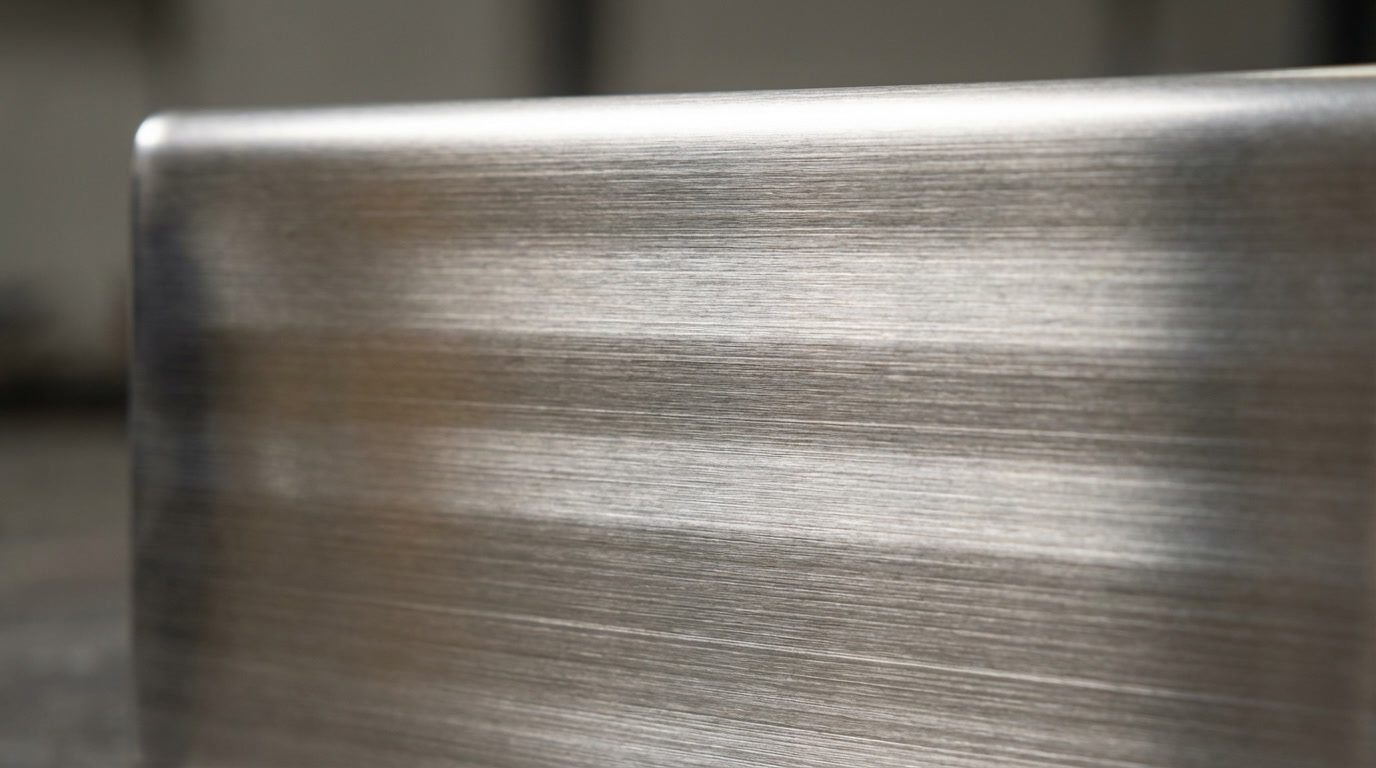
What you see: fine parallel lines across the surface - too regular to be scratches, too visible to be polish. Where the light catches the grain at the right angle, a bright band appears down its length. Rotate the object and that band moves: the anisotropic quality of brushed metal, and the single biggest signal it's a real surface.
3. Wood Grain & Natural Timber
The growth rings and fiber pattern of real wood - the specific grain direction, the knots where branches once grew, the color variation between early and late growth, the way grain runs through a piece of timber. AI defaults to a general wood-brown texture with no grain logic. Real wood grain has direction, interruption and character.
- Use
- Furniture, homeware, natural and organic beauty, food and beverage, any creative where wood is a material or a heritage signal.
- Avoid
- The creative needs contemporary minimal or industrial surfaces - wood grain is warm and natural, which is either the right signal or the wrong one.
natural wood grain, visible fiber pattern
oak grain, warm tone direction
walnut wood, dark grain variation
reclaimed wood, worn grain and age marks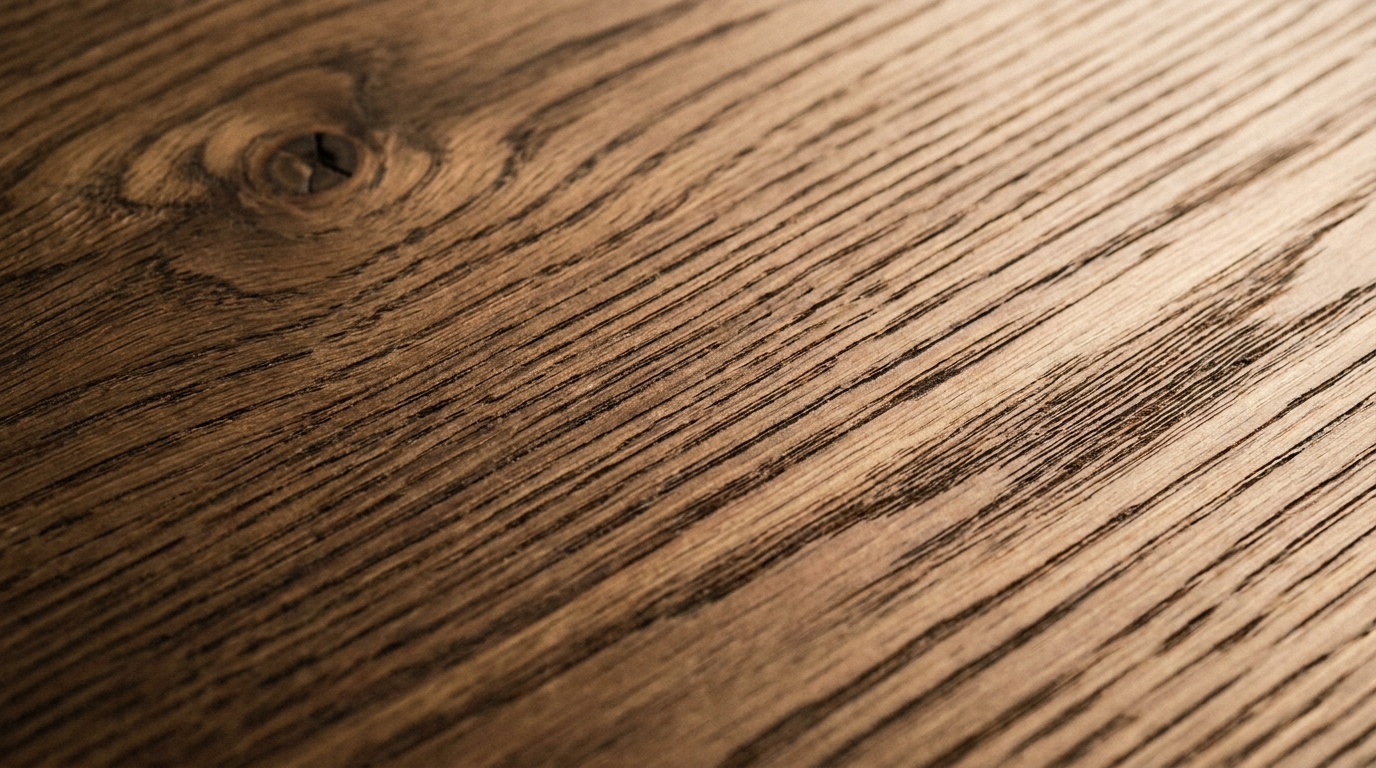
What you see: the grain runs diagonally and is interrupted by a knot - the lines bend around it the way real grain does. The variation between paler early growth and darker late growth is visible. The grain is worn smoother at the table's edge where hands and arms rest, catching light there. This is real wood, not a wood-textured surface.
4. Worn & Distressed Denim
Denim that's been washed and worn many times, softened and distressed - the specific white-highlight fade at stress points like the thighs and knees, the fraying at the hem, the fading of the indigo in the wash, the slight piling of the fabric with age. Denim wears in specific, predictable patterns.
- Use
- Casual lifestyle, fashion-adjacent beauty, any creative with a relaxed or authentic register, UGC-style content.
- Avoid
- The creative is formal or luxury positioning - distressed denim is casual by nature.
faded denim, worn indigo
denim stress fading at thighs and knees
frayed denim hem, natural wear
denim piling on friction points
distressed denim, honeycomb wear pattern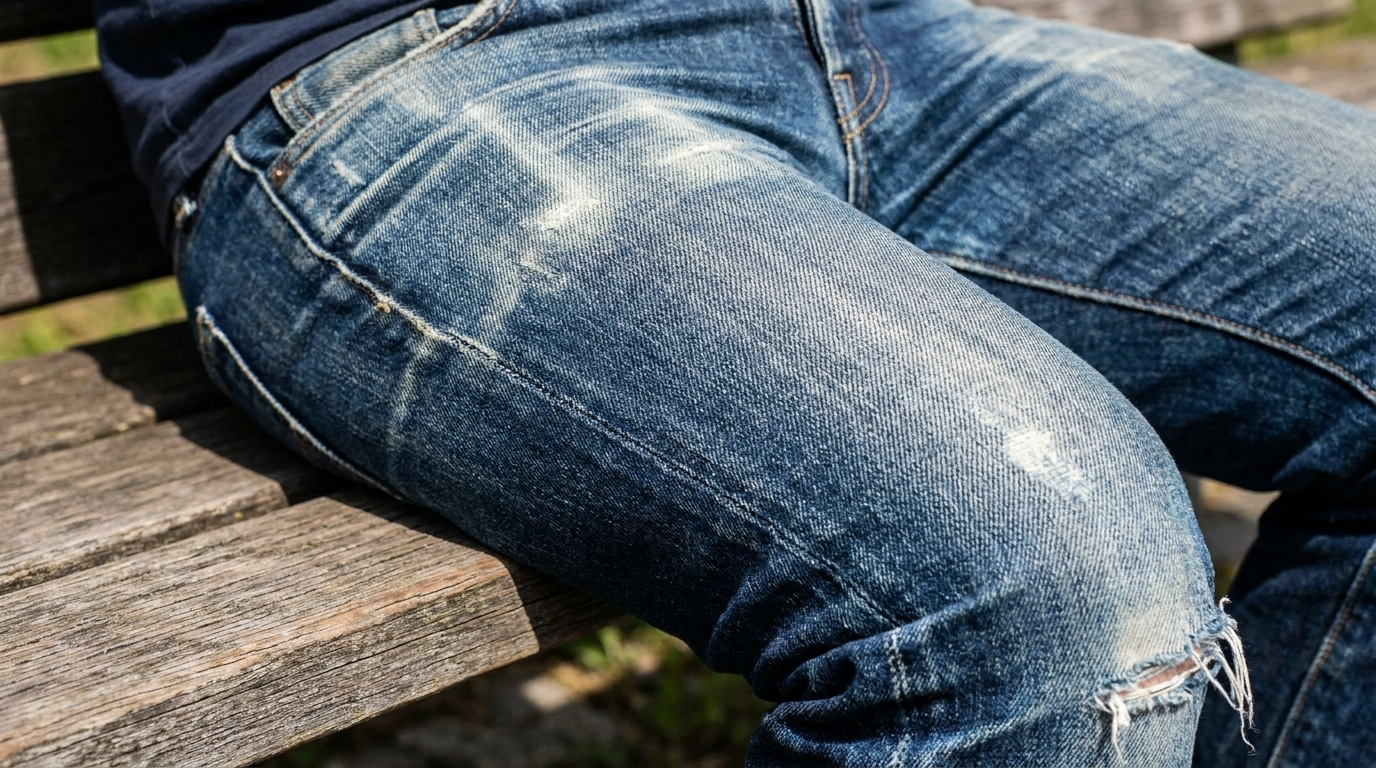
What you see: the fading on the thigh has the exact shape of a thigh - brightest at the widest point, darkening toward the inner leg. The whisker lines at the hip radiate outward from the crease in a pattern that only forms from repeated bending. The hem is frayed. Real denim has a wear history that maps exactly onto the body's use - the same body-mapping principle as realistic AI clothing.
5. Raw & Unfinished Wood
Timber in its working state - rough-sawn edges, visible tool marks, the specific texture of wood that has not been sanded, sealed or finished. Raw wood is porous, slightly fuzzy on the surface, and pale. It communicates craft, process, and the honesty of a material before it has been dressed for presentation.
- Use
- Artisan and handmade positioning, craft and maker aesthetics, natural and sustainable brands, any creative where the production process is part of the story.
- Avoid
- The creative calls for polished, premium or finished surfaces - raw wood reads as a deliberate choice in the right context and as incompleteness in the wrong one.
rough-sawn wood edge, unfinished timber
raw wood surface, visible grain and fuzz
unfinished wood, pale natural color
saw marks on wood, worked surface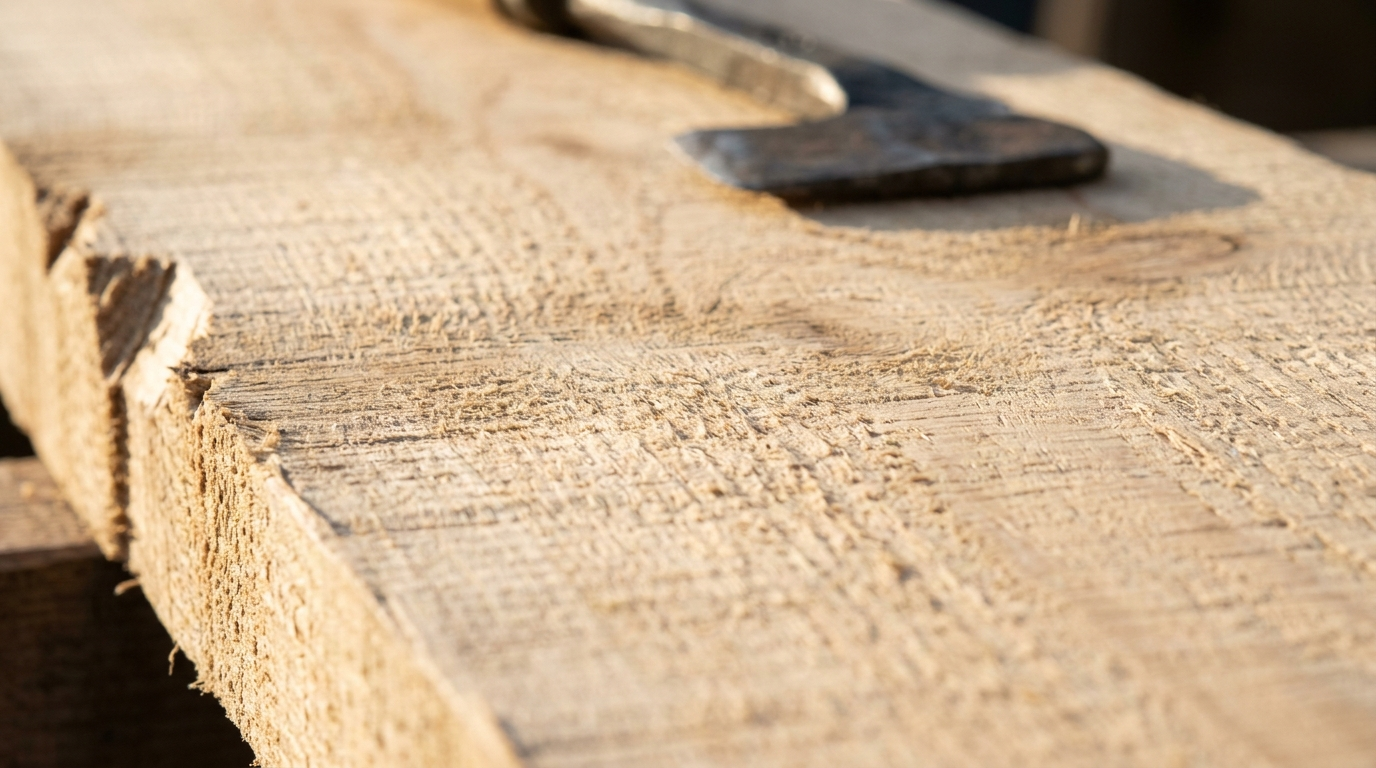
What you see: a slight fuzziness on the surface - individual wood fibers stand up because it hasn't been sanded. Saw marks catch the raking light. The raw edge is rough and would splinter. The pale, dry, matte surface confirms nothing has been done to it - no seal, no stain. This wood is being shown as material, not as a finished product.
6. Scratched & Oxidized Metal
Metal that has been used in the world - light scratches on a stainless surface, the brown-orange of iron oxide forming at a scratch or steel edge, the green patina of aged copper or brass, the dulling of a chrome surface touched and cleaned many times. Oxidation and scratching are the language of objects that have done real work.
- Use
- Industrial and working heritage positioning, tools and outdoor gear, any creative where the object should feel used and functional.
- Avoid
- The object needs to feel new, or an unscratched premium surface is the selling point - oxidation signals age and use.
scratched metal surface, use marks
light scratches on stainless steel
rust forming at scratch on steel edge
copper patina, green oxidation
brass tarnish, aged surface
worn chrome, dulled and touched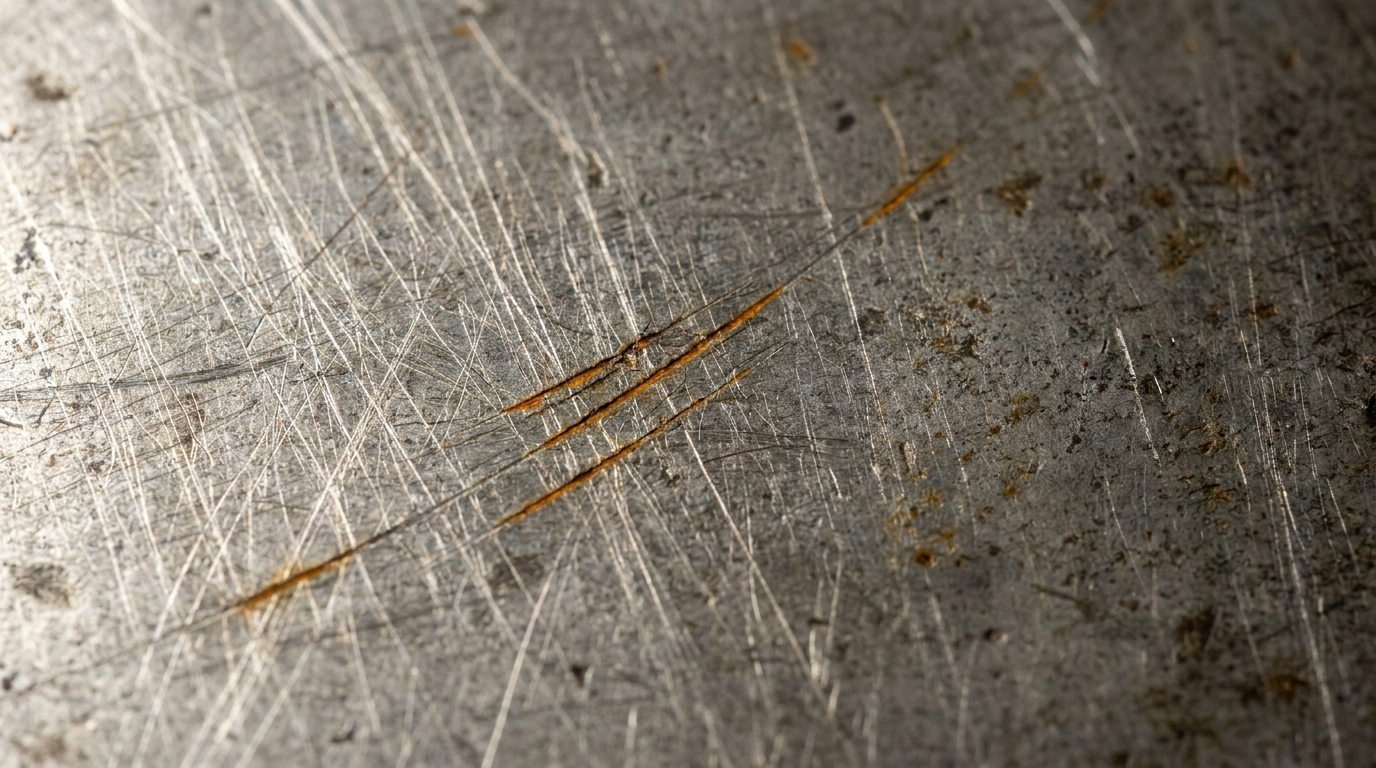
What you see: the scratches run in multiple directions - this object has been set down on rough surfaces, dragged, stacked. The rust at the deepest scratch is the specific orange-brown of iron oxide. It confirms the scratch broke through the surface treatment and exposed the metal beneath, which then oxidized. This object has been working.
7. Matte Ceramic & Pottery Texture
The surface quality of unglazed or matte-glazed ceramic - slightly grainy, slightly absorbent, with the faint texture of something formed by hand or in a mould. The color is specific: not pure white but a warm or cool off-white with subtle variation. The imperfection of a handmade object is the visual language of the artisan.
- Use
- Artisan lifestyle, coffee and beverage in a craft register, natural beauty and wellness, warm editorial food photography.
- Avoid
- The creative calls for perfect gloss or industrial precision - matte ceramic is hand-shaped and warm, which conflicts with a high-gloss aesthetic.
matte ceramic surface, slight grain
unglazed pottery texture, absorbent finish
handmade ceramic mug, uneven irregularity
matte ceramic cup, warm off-white tone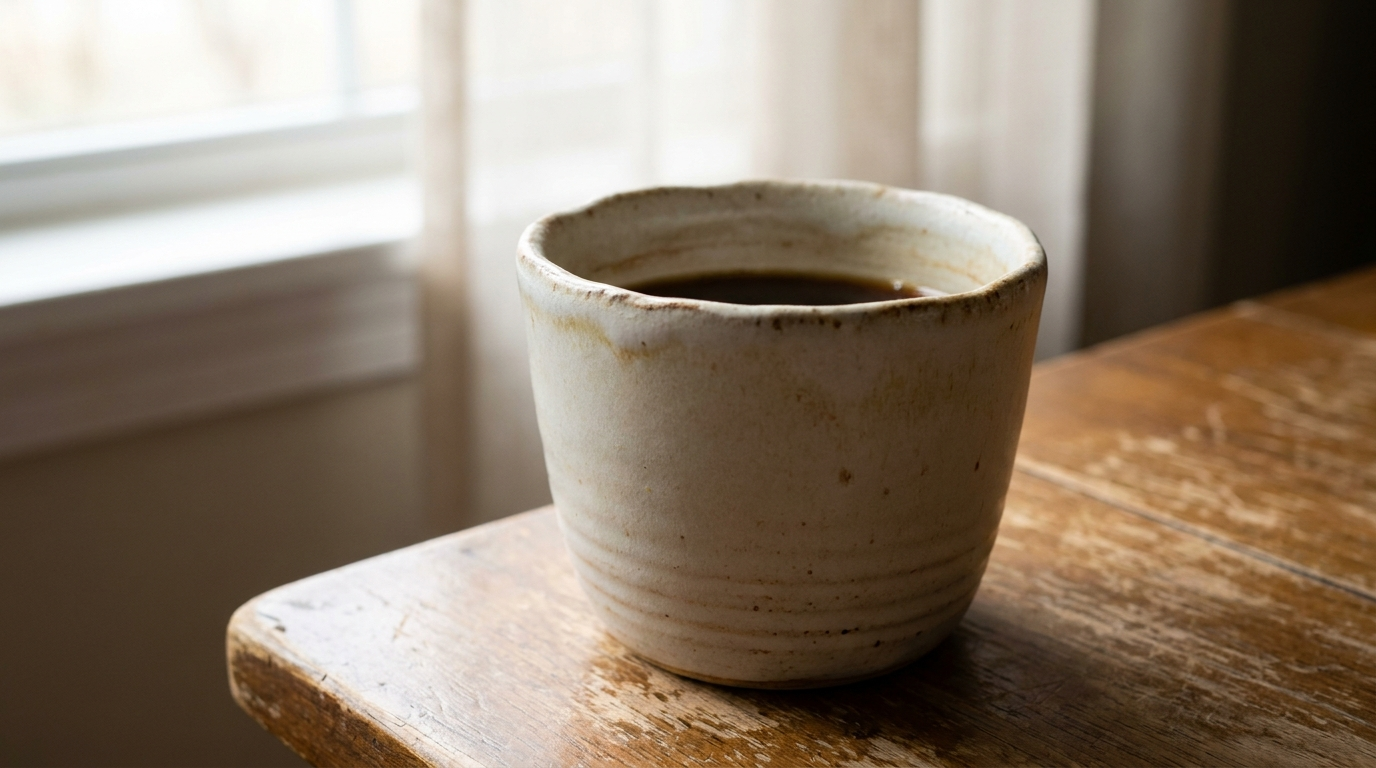
What you see: the rim isn't perfectly circular - it has the slight variation of something shaped by hand rather than machine. The surface has a grain and a slightly absorbent quality. The throwing lines from the wheel are faintly visible. The window light scatters across it rather than reflecting - because it's matte. This is a mug made by a person.
8. Worn Paint & Peeling Surfaces
Paint that has reached the stage where it shows its age - chipping at edges and corners, cracking into a fine crazed texture, peeling to reveal the material or a previous color beneath, fading unevenly with sun exposure. Worn paint has enormous character.
- Use
- Vintage and heritage positioning, artisan and craft aesthetics, urban lifestyle and edge, any creative where age is the signal.
- Avoid
- The creative needs clean, new or premium surfaces - worn paint reads as character or as neglect depending on context.
chipped paint at edges, worn surface
crazed cracked paint, aged texture
peeling paint revealing wood beneath
faded painted surface, sun exposure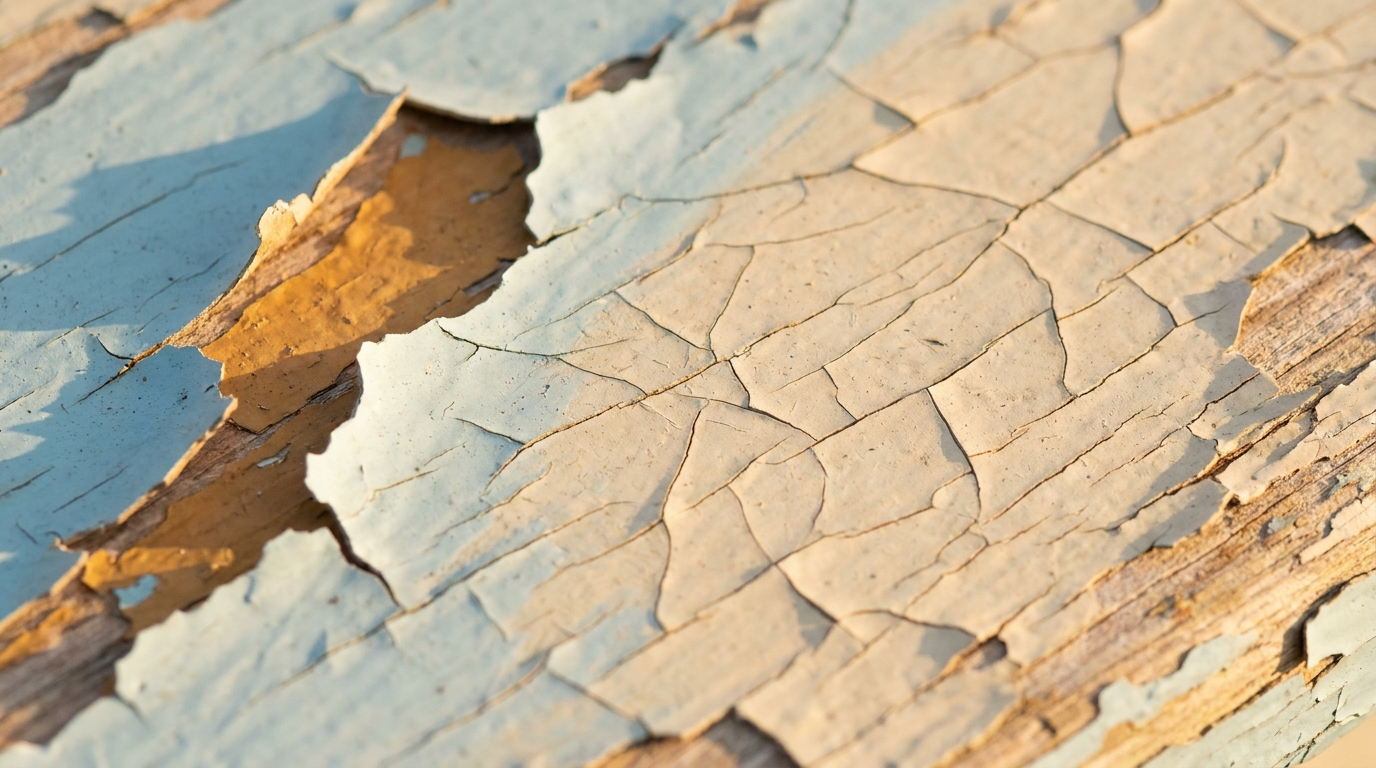
What you see: the paint has chipped at the edges and corners first - the natural failure points. The crazing runs across the flat surface in a fine web. Where it's peeled, the material beneath shows. The fading follows sun exposure and the contraction of the wood underneath. This has a history.
9. Polished Finish on Wood
Wood that has been waxed or oiled - a semi-gloss surface that sits between matte raw wood and hard lacquer. The wax fills the grain slightly, deepens the color, and creates a soft directional sheen that is warm rather than mirror-bright. It's the surface of a well-made and cared-for object.
- Use
- Premium homeware and furniture, luxury lifestyle, natural but crafted positioning, artisan product settings where the material is finished but not synthetic.
- Avoid
- The creative needs raw or unfinished authenticity - a waxed surface is cared-for wood, a different signal from raw timber.
waxed wood surface, semi-gloss finish
oiled wood, deepened grain and warmth
polished wood, soft directional sheen
hand-rubbed wood finish, warm and matte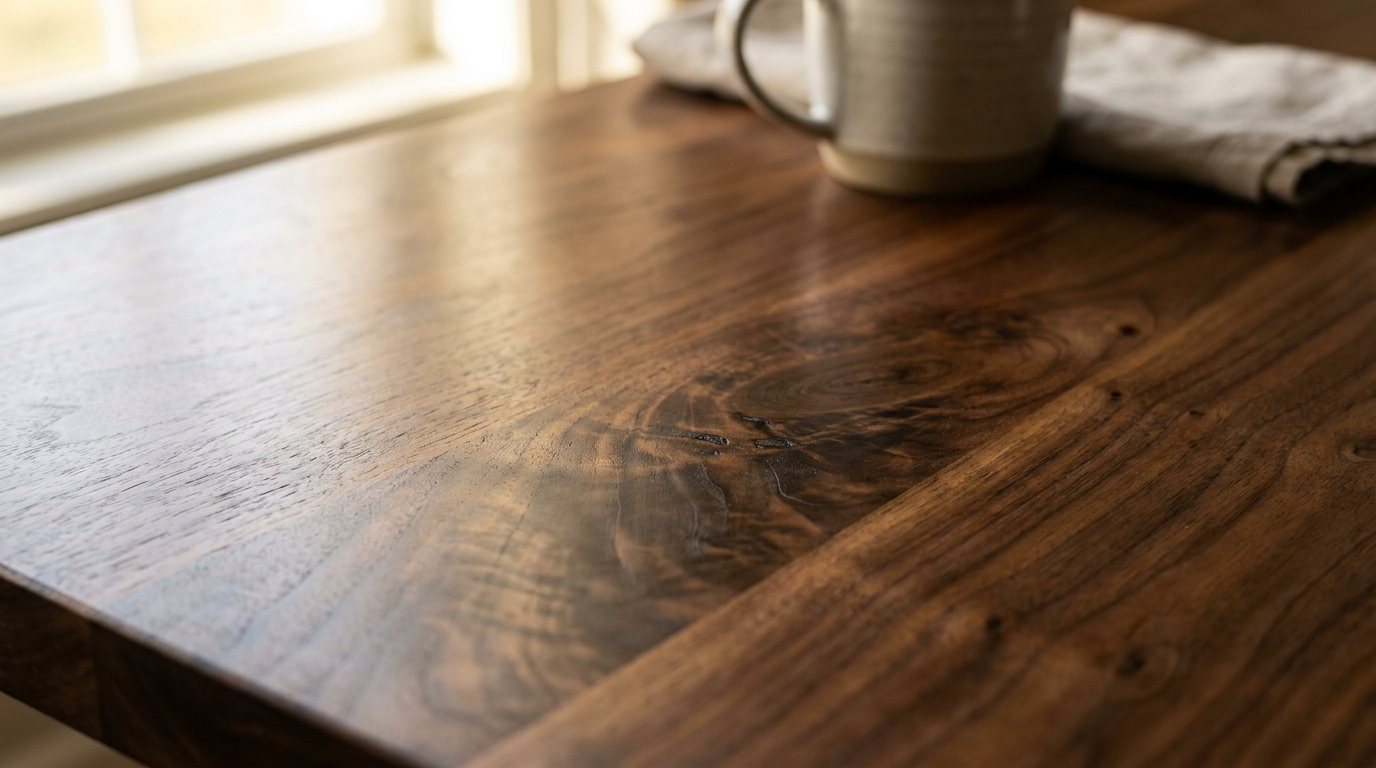
What you see: the wax has deepened the wood's color into a warm, rich version of the raw grain. A soft sheen runs down the surface, warm rather than mirror-bright, moving as the object turns. The grain is filled just enough that you can see it but not feel it. This is wood that's been cared for over years.
The Full Material Wear Stack
Layer wear across every material in the frame so nothing reads factory-fresh:
Lifestyle shot of a worn leather wallet on an oiled walnut table beside a
matte ceramic coffee mug, the leather softened and darkened at the fold with
natural edge scuffing and uneven contact patina, the walnut grain deepened
by wax with a soft directional sheen and worn smoother where hands rest, the
ceramic mug slightly irregular with a warm off-white matte glaze, warm
morning window light raking across the surfaces, 85mm macro lens,
photorealistic product lifestyle photography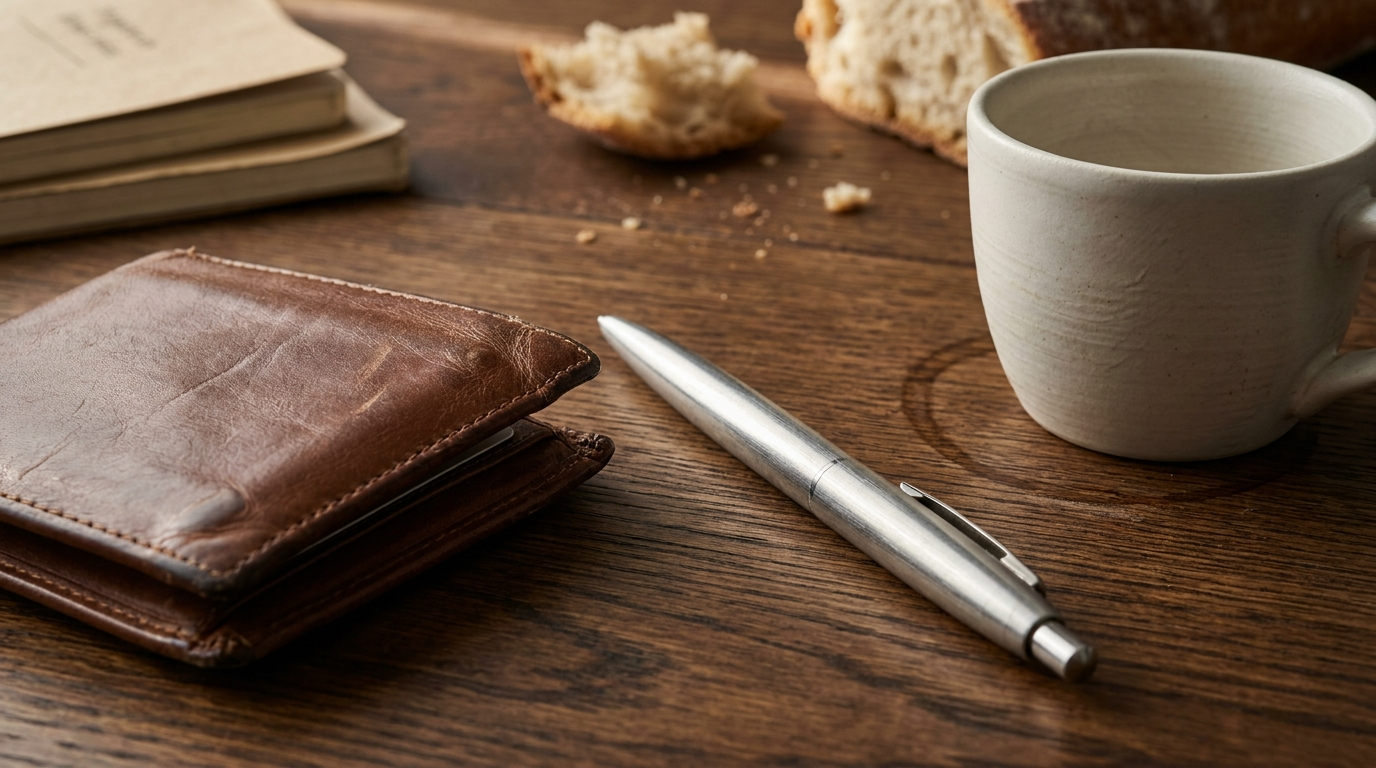
Leather patina, waxed grain, matte ceramic - three materials, three different wear stories, each proving time and use. Nothing in the frame looks like it arrived this morning.
Conclusion: Give Every Object a Past
Four to lock in:
1. Brand new is the render tell. A flawless, uniform surface reads as a 3D asset. Earned Wear - a scuff, a patina, a fade - is what makes an object real.
2. Every material wears differently. Leather patinas, metal scratches, wood grains, denim fades at the stress points. Prompt the specific wear, not "worn."
3. Wear maps to use. Denim fades where the knee bends, leather darkens where hands touch, wood smooths where arms rest. The wear should sit where a body put it.
4. Match the wear to the brand. Patina and fade signal heritage and craft; flawless signals new and premium. Age is an asset or a liability depending on the position.
The rule of thumb that anchors it: a material carries its history on its surface. Leather remembers the hand, wood remembers the cup, denim remembers the knee. A real material shows what has happened to it - and nothing happening to it is the definition of a render.
So the move: take a flawless product on a flawless surface and regenerate it with one wear detail on each - a patina on the leather, a ring mark on the wood, a chip on the paint. Same objects. My bet is they stop looking like a catalog render and start looking like things a real person owns.
Related: water & liquid, prompt structure, and the full AI ad prompt library.
Steal my ad concept & hook library
Every prompt, archetype, and hook I use in my own accounts. Updated weekly.
Join the free Skool community