


AI dresses everyone in shrink-wrap.
Clothing painted onto the body, wrinkle-free, no tension, no drape, defying gravity - and box-fresh forever, like it was rendered new five seconds before the shot. It fits like a second skin because that's literally what the model treats it as.
Real clothes don't do that. Real clothes have been put on by a person, pulled by their movement, dragged by gravity, and washed forty times.
Getting fabric right is what separates a lifestyle ad that feels authentic from one that reads as a 3D mockup. And it's the layer I ignored the longest - I prompted skin, hair and light for months before I ever wrote a word about cloth.
These are the nine fabric details I use to make AI clothing look worn instead of rendered - split into how fabric moves and how fabric looks, with the exact keywords for each.
Let's break the shrink-wrap.
Why AI Clothing Looks Fake
The default garment has no relationship to anything - not the body inside it, not gravity, not its own history.
The Three Forces: Real fabric is shaped by three things AI ignores - the body (tension lines and folds where it bends), gravity (drape, pooling, hang), and time (fading, pilling, a softened collar). Prompt all three and cloth stops being shrink-wrap and starts being clothing someone owns.
Every "how fabric moves" detail below is one of those three forces. Every "how fabric looks" detail is the texture that makes a specific fabric read as itself.
How Fabric Moves: The 3 Forces
1. Natural Folds & Wrinkles (the body)
Fabric creases where the body bends it - the elbow, the waist, the hip, the armpit. Without these, clothing looks vacuum-sealed on. With them, a person put the garment on.
Use for: any lifestyle ad where apparel is visible, fashion-forward skincare or wellness. Avoid when: hard-surface product-only shots, or where clothing is pure background.
natural fabric folds at elbow and waist
clothing wrinkles from movement, natural creasing
realistic fabric tension across shoulders
natural gather at hip and waist, worn clothing
What you see: the fabric bunches slightly at the inside of the elbow. The waist shows horizontal tension from bending. The shirt has been worn, not rendered.
2. Fitted Clothing Logic (the body, under tension)
How fabric behaves when it fits - tension lines radiating from stress points, the cloth following the body's real curves. AI defaults to one of two errors: painted-on tight (unnaturally smooth) or floating loose (hovering off the body). Correct fit is neither.
Use for: activewear, fitted lifestyle clothing, any shot where fit communicates function. Avoid when: the garment is intentionally oversized or draped.
fabric tension lines radiating from stress points
fitted clothing pulling naturally across body
clothing responding to body underneath, realistic fit
shirt fabric on bust and hip, fitted garment logic
What you see: diagonal tension lines run from the shoulder toward the chest. The fabric is taut across the torso with a small gather where it relaxes. Worn by a person, not a mannequin.
3. Oversized & Draped Clothing (gravity)
The opposite logic - fabric that has too much of itself, pooling at the wrists, folding over the waistband, sliding off a shoulder. Oversized clothing has drape physics AI ignores, defaulting to stiffness or deformed collapse.
Use for: loungewear, casualwear, streetwear, comfort-first and "off-duty" creative. Avoid when: the creative calls for tailored or fitted positioning.
oversized shirt draping off shoulder naturally
fabric pooling at wrists, relaxed volume
excess fabric folding over waistband
relaxed oversized fit, natural drape and gravity
What you see: the shoulder seam has slid off and the fabric hangs there unheld. The sleeve is too long and bunches into folds. The hem is uneven. Gravity is doing exactly what gravity does.
4. Clothing With Wear & History (time)
Slight pilling on a sweater. A faded patch on a tee. A pulled thread, a softened collar. The marks of a garment worn many times. Without them, every AI outfit looks brand new - a credibility problem in lifestyle and UGC.
Use for: relatable lifestyle, UGC-style ads, "real person" testimonials, comfort/authenticity brands. Avoid when: the ad is for a pristine, brand-new, or premium product that should look untouched.
slight pilling on sweater fabric, worn texture
faded fabric, gentle wear marking
soft worn collar, fabric softened by use
small pulled thread on knit, natural wear
What you see: the collar has lost its crisp edge. The print has faded slightly. This is a garment in someone's rotation - not one rendered new. It's the wardrobe equivalent of the imperfection signals in realistic AI skin.
How Fabric Looks: 5 Textures That Read Real
Each fabric has a signature. Name it, and the material reads as itself instead of generic "cloth."
| Fabric | Reads as | Best for |
|---|---|---|
| Cotton | Everyday, matte, honest | basics, casual, natural/organic |
| Linen | Relaxed, coastal, natural | summer, sustainable, Mediterranean |
| Knitwear | Warm, cozy, physical | autumn/winter, comfort brands |
| Silk & satin | Luxury, expensive, occasion | premium beauty, evening, fragrance |
| Denim | Casual, rugged, lived-in | everyday, active, relatable |
Cotton
Reads as
Everyday, matte, honestBest for
basics, casual, natural/organicLinen
Reads as
Relaxed, coastal, naturalBest for
summer, sustainable, MediterraneanKnitwear
Reads as
Warm, cozy, physicalBest for
autumn/winter, comfort brandsSilk & satin
Reads as
Luxury, expensive, occasionBest for
premium beauty, evening, fragranceDenim
Reads as
Casual, rugged, lived-inBest for
everyday, active, relatable
1. Cotton
The matte, slightly rough surface - visible weave, subtle fuzz, no sheen. AI renders all fabric with a faint synthetic gloss. Cotton should look like it came out of a dryer, not a CGI pipeline.
cotton fabric texture visible, matte surface
woven cotton weave detail, slight surface fuzz
soft worn cotton, cotton jersey texture, slight pilling
natural cotton grain, no synthetic sheen
What you see: a slightly rough, fibrous surface with visible weave up close. No reflective highlight anywhere - cotton absorbs light rather than bouncing it.
2. Linen
The irregular weave - slubby, uneven thread thickness, creasing hard. Linen is one of the hardest fabrics for AI to get wrong, because imperfection is its defining trait. Lean into it.
linen fabric texture, visible irregular weave
slubby linen, natural thread variation
linen creasing heavily at waist and arms
natural linen grain, characteristic horizontal creases
What you see: some threads thicker than others, the weave loose and visible, creases deep and angular. It looks pulled from a weekend away.
3. Knitwear
The looped, three-dimensional surface - ribbing, cable patterns, visible stitch structure. AI flattens knitwear into a smooth surface with a vague texture hint. Real knit has depth within the fabric.
chunky knit texture, visible stitch dimension
cable knit pattern, three-dimensional surface
fine knit sweater, looped yarn texture
wool knit with natural fiber depth
What you see: genuine depth - shadows fall inside the channels between ribs. It reads as warm, physical wool you could reach out and feel.
4. Silk & Satin
The directional highlight - a bright specular zone that shifts as the angle changes, with deep dark valleys in the folds. AI applies flat, uniform sheen. Real silk has one bright zone and dark creases.
silk fabric sheen, directional specular highlight
satin surface with deep fold shadows
liquid silk drape, high contrast fold shadows
luminous silk, bright highlight and dark valleys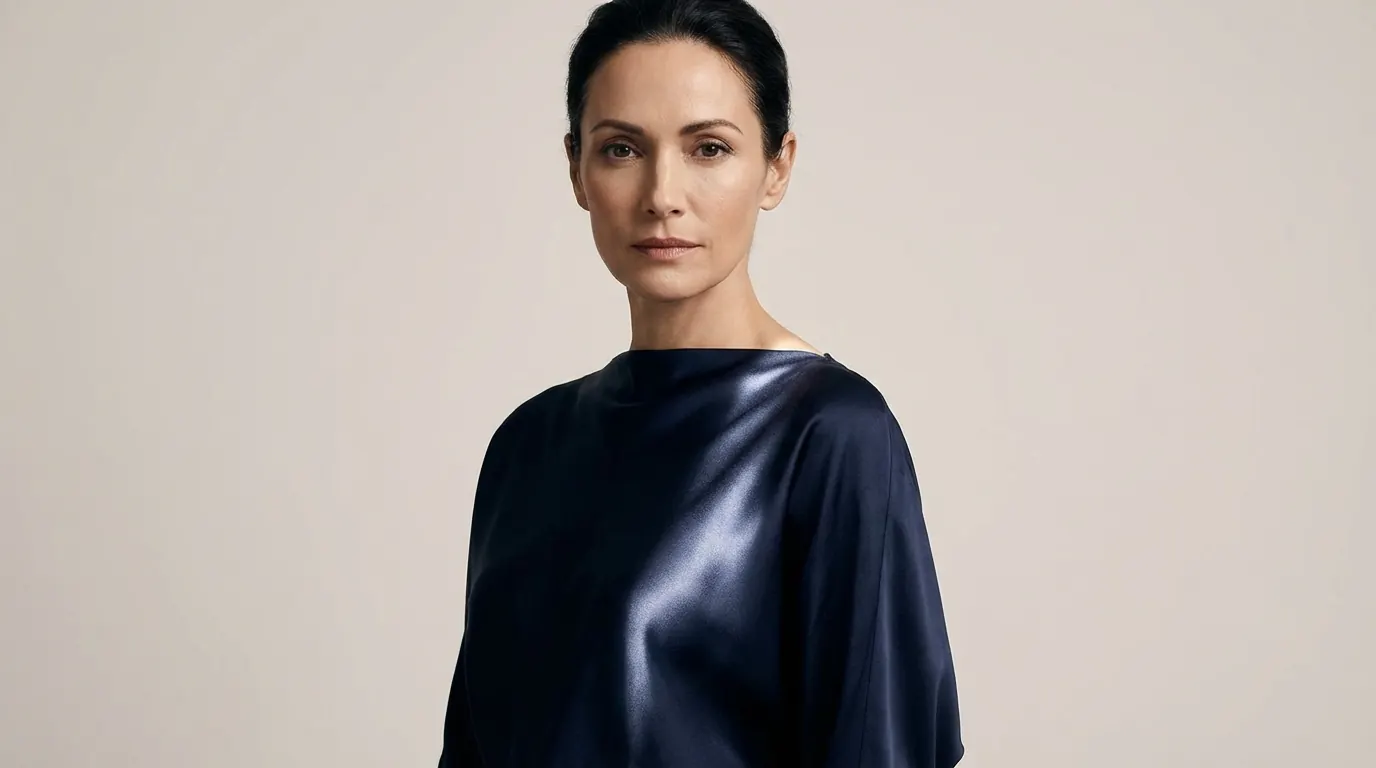
What you see: one zone catches light brightly; adjacent folds go very dark; the transition is sharp, not gradual. That contrast is what makes silk look expensive - and it only happens when the sheen is directional.
Note
5. Denim
The diagonal twill weave, fade lines from wear, a rigid structure that softens at the joints. AI denim loses its rigidity and renders soft and even. Real denim holds structure and fades where it flexes.
denim fabric texture, diagonal twill weave visible
worn denim with natural fade lines
denim fabric with fade creases at knees
natural indigo denim, structured stiff drape
What you see: the twill pattern is visible. The fabric is lighter where it flexes - thigh, knee - and darker in the recesses. Washed many times.
The Full Fabric Realism Stack
Loaded into the Subject slot of the seven-slot prompt structure, alongside your skin and hair details:
...soft cotton t-shirt with natural folds at the waist and shoulders,
visible cotton weave texture, slight pilling, worn softened collar, fabric
tension across the shoulders from arm position, 50mm lens, unretouched
realistic lifestyle photography
Pair it with no rendered fabric, no 3D cloth, no vacuum-sealed clothing in your negatives, and the outfit stops looking molded on. Fabric works alongside realistic AI hair and natural facial expressions.
Conclusion: If It Looks New, It Looks Fake
Four to lock in:
1. The Three Forces run everything. Body, gravity, time. If fabric responds to none of them, it's shrink-wrap. Prompt all three.
2. Name the fabric. "Cotton weave, matte surface" beats "shirt." Generic cloth is where the render sneaks back in.
3. Wear is credibility. A faded collar and slight pilling do for clothing what a blemish does for skin - they prove a real person owns it.
4. Match fabric to positioning. Silk sheen for luxury, worn denim for relatable. The fabric itself is a brand signal.
The rule of thumb I keep with the rest: if the clothing in your ad looks brand new and perfectly smooth, it belongs to a mannequin - not a customer.
So the move: take your best lifestyle prompt and add three fabric cues - natural folds at the waist, visible cotton weave, a slightly worn collar. Run it against your current version. My bet is the "worn" one feels like a real person's Tuesday - because real fabric has a history.
Steal my ad concept & hook library
Every prompt, archetype, and hook I use in my own accounts. Updated weekly.
Join the free Skool community