Here's AI's favorite pose.
Subject facing the camera. Arms at sides. Product held up at chest height, presented to the lens like they just won it at a raffle. A polite, symmetrical, waiting-for-the-photo stance.
Nobody stands like that. Ever.
The moment a body is doing something - reaching, laughing, adjusting, using the product - it stops being a placeholder and becomes a person. Action and gesture are the single fastest way to add life to a creative without changing one other thing about the shot.
These are the six gestures I prompt to break the pose and put the body in motion. When to use each, when to hold back, and the exact keywords.
Let's get the body moving.
Why AI Poses Look Stiff
The generator defaults to a static display because it's the simplest thing to produce. Face forward, hold the product, done.
The Trophy Pose: AI's default of standing the subject face-on with the product held up for the camera like a trophy. It's the universal "this is an ad" signal - the exact posture no real person adopts unless someone with a camera asked them to. Break it and the creative stops reading as advertising.
The fix is a mindset shift, and it's the same one from the facial expressions work: prompt what the body is doing, not how it's positioned.
Every gesture below is a way to make the body do something instead of display something.
The 6 Gestures That Put a Body in Motion
| Gesture | Reads as | Use for |
|---|---|---|
| Product in use | A real demonstration | any usage moment - skincare, food, unboxing |
| Candid movement | Caught, not produced | UGC hooks, social-first, lifestyle |
| The action shot | High energy, committed | fitness, sport, adventure |
| Micro-gestures | Relaxed, real person | spokesperson, wellness, lifestyle |
| Hand & touch | Believable, human | any shot with visible hands |
| Sitting & resting | At home, off-duty | indoor lifestyle, morning routine |
Product in use
Reads as
A real demonstrationUse for
any usage moment - skincare, food, unboxingCandid movement
Reads as
Caught, not producedUse for
UGC hooks, social-first, lifestyleThe action shot
Reads as
High energy, committedUse for
fitness, sport, adventureMicro-gestures
Reads as
Relaxed, real personUse for
spokesperson, wellness, lifestyleHand & touch
Reads as
Believable, humanUse for
any shot with visible handsSitting & resting
Reads as
At home, off-dutyUse for
indoor lifestyle, morning routine
1. Product in Use
The subject actively interacting with the product - not holding it up for the camera, but using it the way it's meant to be used. It's the most direct product demonstration there is, and the clearest signal of what the product does and how it fits a life.
Use for: any product with a usage moment - skincare application, food and beverage, fitness equipment, household, unboxing hooks. Avoid when: the product is purely decorative or the shot is intentionally a display.
applying cream to face with fingertips
holding a glass mid-sip, natural grip
opening a package, hands engaged
pointing at product naturally, not staged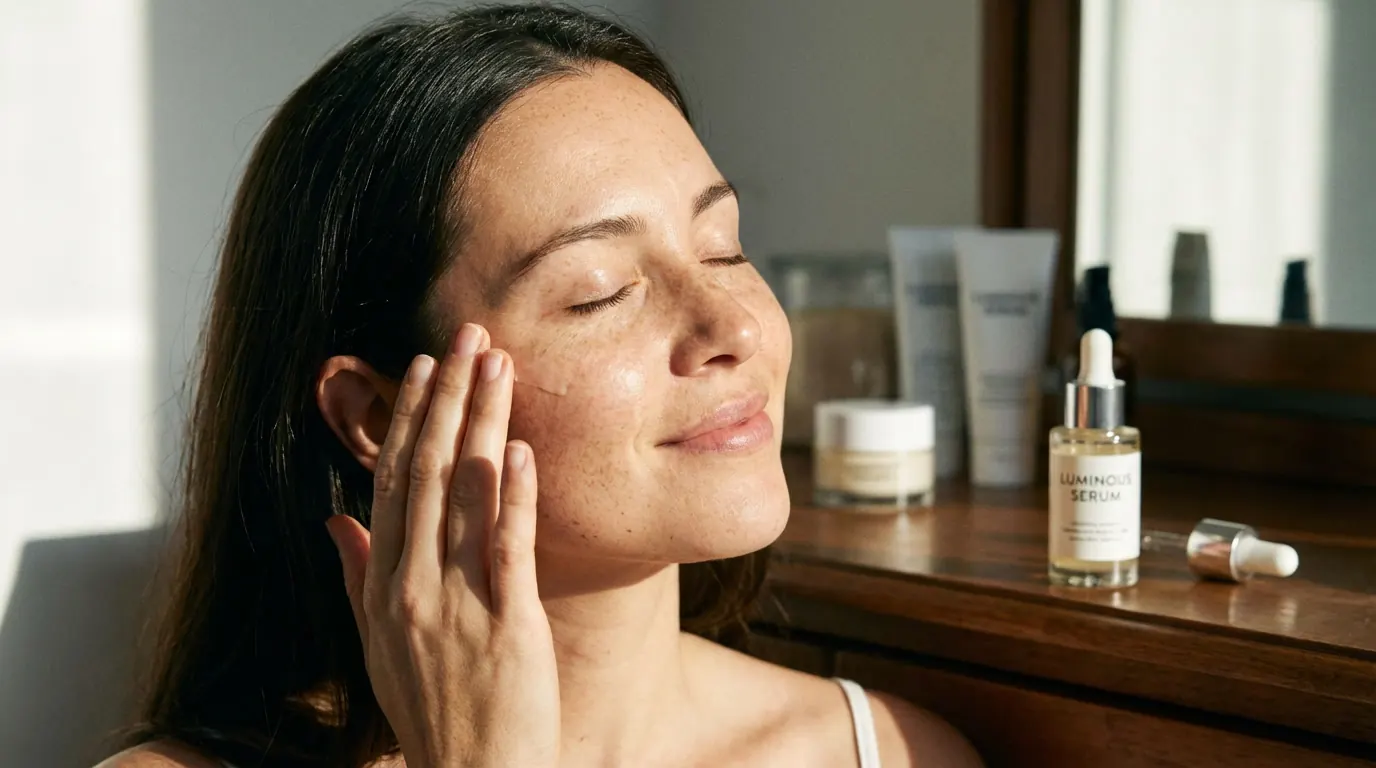
What you see: the fingers press gently into the skin rather than hovering above it. The product is being used, not displayed. The bottle sits in the background for context without competing for attention.
2. Candid Movement
The subject caught mid-motion doing something ordinary - walking, laughing, adjusting clothing, glancing over a shoulder. No pose, no performance. The camera just happened to be there.
This is the foundational gesture language of UGC, and the fastest way to strip "ad energy" out of a creative.
Use for: UGC hooks, lifestyle ads, social-first content, anything that needs to feel captured rather than produced. Avoid when: the creative is intentionally polished or editorial.
walking toward camera, mid-stride natural movement
laughing mid-sentence, candid expression
tossing hair back naturally, movement blur
looking over shoulder, natural turn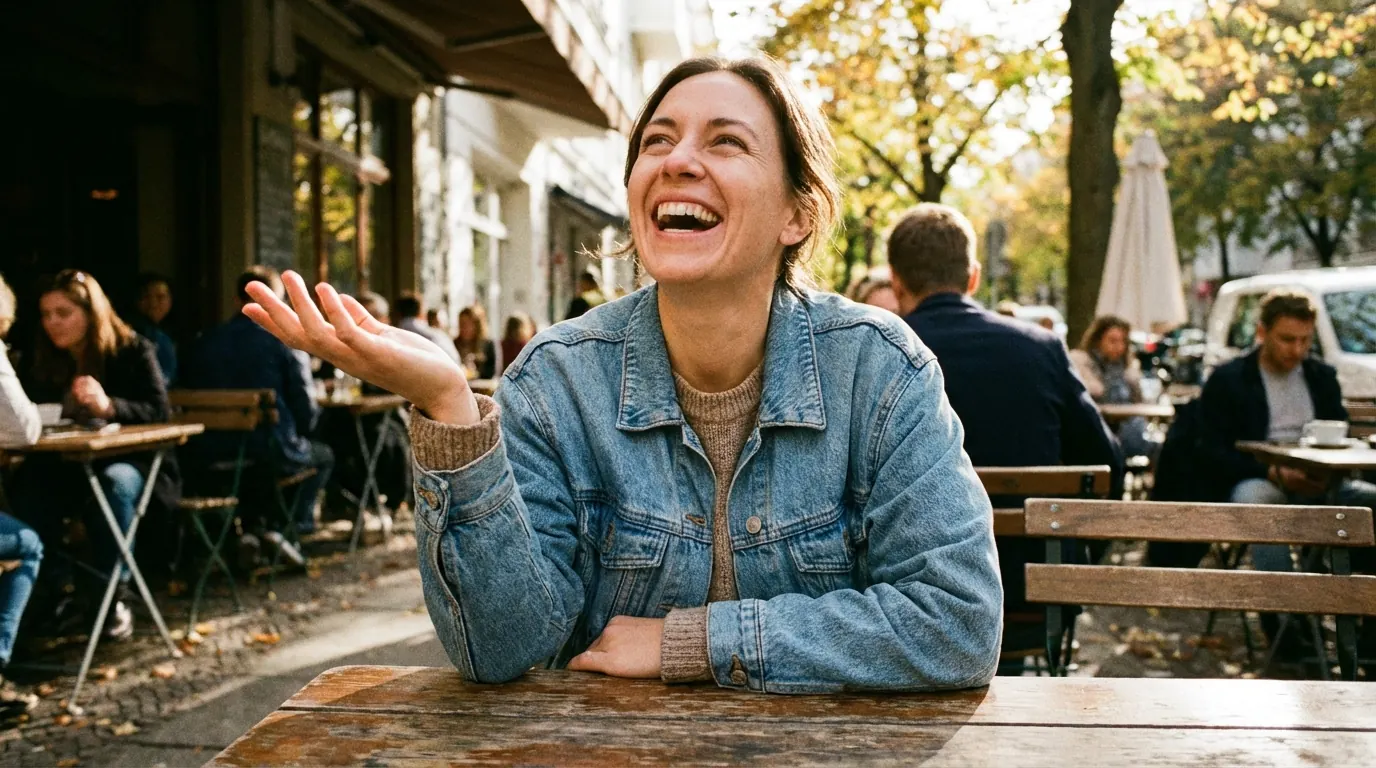
What you see: the hand is at a height that only makes sense mid-conversation - not placed there for the photo. The head tilt confirms movement that just happened. The frame looks pulled from a video, not composed as a still.
3. The Action Shot
The subject doing something physically demanding - running, jumping, lifting, dancing. High energy, motion blur, a body fully committed to what it's doing. The visual grammar of fitness, sport, and high-energy brands.
Use for: fitness and activewear, sports nutrition, action/adventure lifestyle, any product that lives in an active context. Avoid when: the product calls for calm - an action shot in a skincare or wellness ad is a tonal mismatch.
mid-stride running, motion blur on legs
lifting weights, mid-rep, muscle engaged
jumping in air, feet off ground, full extension
sprinting, full athletic effort, dynamic angle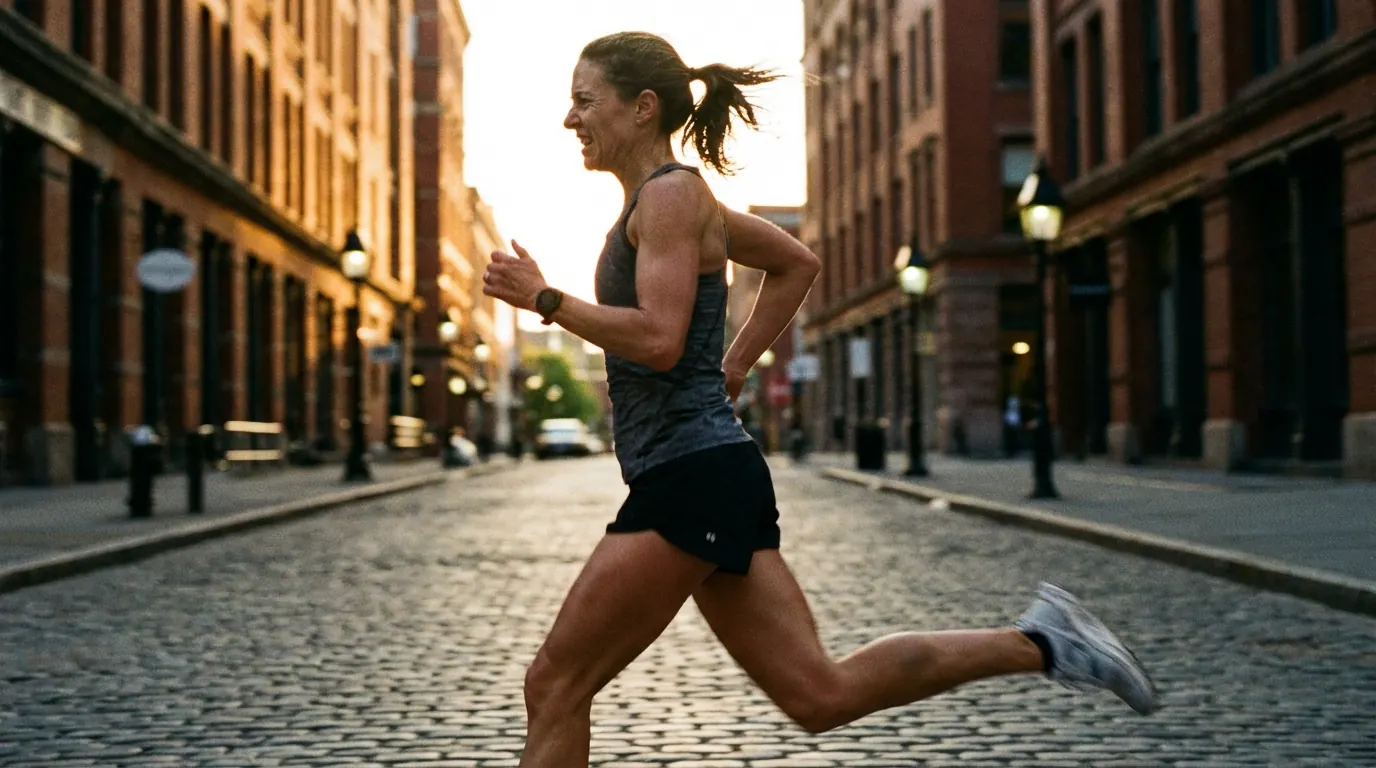
What you see: legs captured mid-stride with the back foot pushing off. Arms at different heights, confirming the running cycle. Hair with motion blur trailing. A low angle makes the movement feel powerful rather than observed.
4. Micro-Gestures
The small, unconscious things people do when they're not performing - resting a chin on a hand, tucking hair behind an ear, leaning against a surface, loosely crossing arms. These signal "real person existing" rather than "subject posing for an ad."
Use for: lifestyle and wellness, spokesperson ads, any close-to-medium shot where body language needs to feel natural. Avoid when: the shot requires formal or directed body language - micro-gestures read relaxed, an asset in the right context and a mismatch in the wrong one.
resting chin on hand, elbow on surface
tucking hair behind ear, mid-gesture
leaning against wall, weight shifted to one side
crossing arms naturally, relaxed not defensive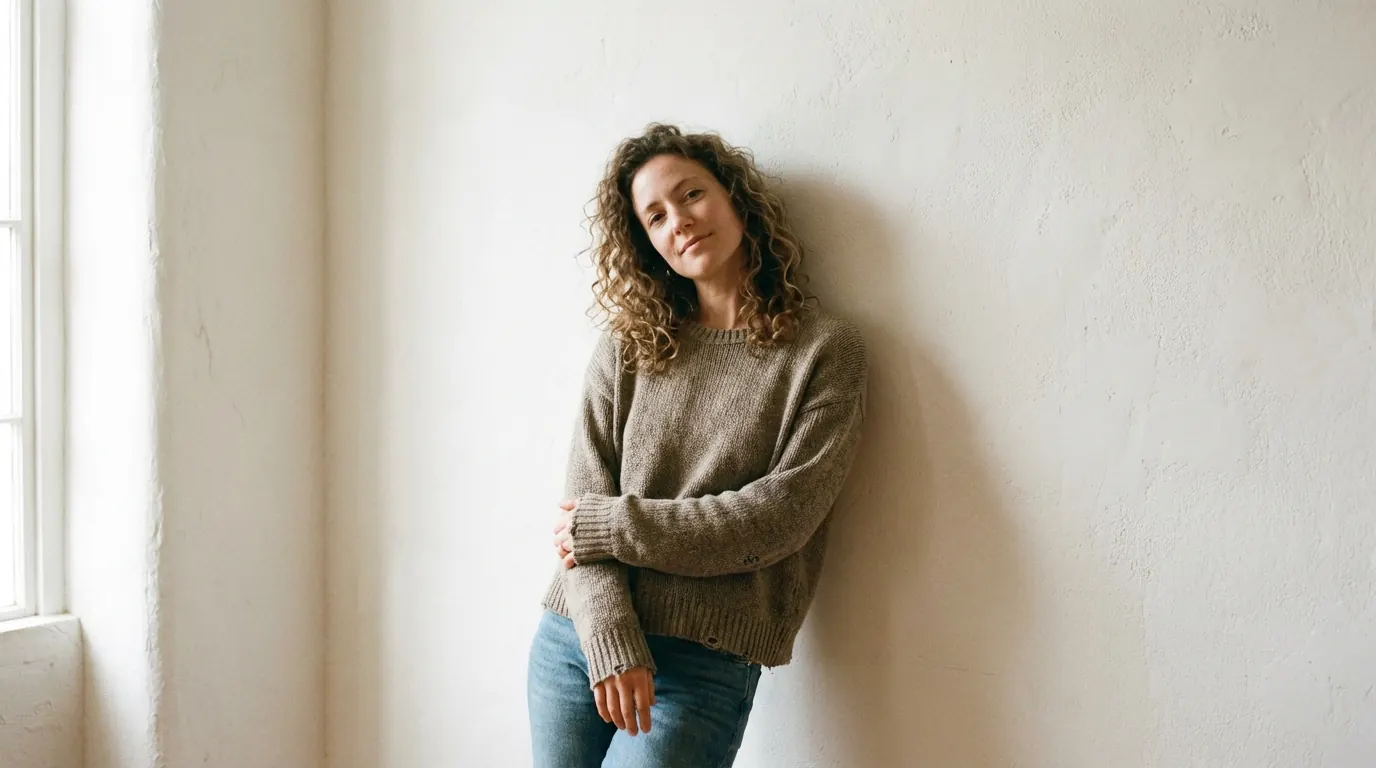
What you see: the weight shift shows in the hips - not standing straight, settled into the wall. The arm cross is low and loose, not high and closed. A triangle of relaxed signals that reads as someone who forgot the camera was there.
5. Hand & Touch Gestures
Hands are the hardest thing for AI to render correctly and the most important to get right - they're in nearly every product-interaction shot. A stiff hand holding a product reads as fake regardless of everything else in the frame.
Use for: any shot with visible hands, product application, holding shots, close-ups where hands carry the story. Avoid when: hands aren't visible or relevant - don't force hand gestures that distract from the subject.
natural hand grip, fingers relaxed around product
both hands cradling product gently
one hand touching face softly, fingertips on cheek
wrist turned naturally, product held casually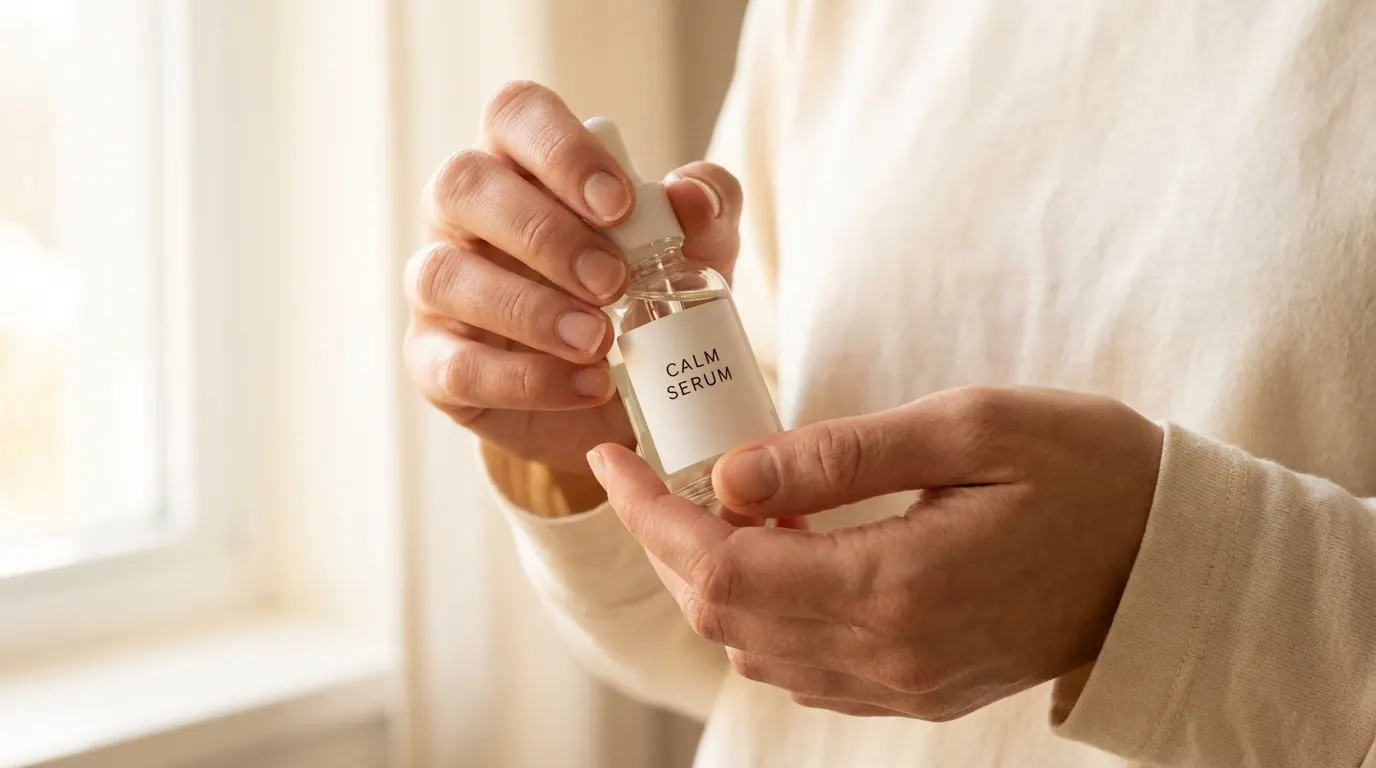
What you see: the fingers sit in different positions - not all straight, not identically curved. The grip is secure but relaxed, the way you hold something you've used for months. The wrists bend naturally instead of locking straight.
Pro Tip
no extra fingers, no deformed hands, no fused fingers from the negative prompt list. The positive gesture and the negative fence work together - neither is enough alone.6. Sitting & Resting Positions
A body at rest - on a floor, a couch, a counter edge - with the natural asymmetry sitting produces. One leg different from the other, a lean, arms finding a surface. AI defaults to standing because it's simpler to generate, but seated positions are far more common in real lifestyle content.
Use for: indoor lifestyle, morning-routine ads, wellness and relaxation, any "at home" creative. Avoid when: the context needs the subject standing or in motion.
sitting cross-legged on floor, relaxed posture
perched on counter edge, one leg dangling
slouched comfortably on sofa, natural relaxed posture
sitting at vanity, leaning slightly toward mirror
What you see: the back isn't straight - it has the natural curve of someone sitting without trying to sit correctly. Legs crossed, one knee higher. One hand passive, the other with a purpose. Someone in their own home, not on a set.
The Full Action & Gesture Stack
This is the capstone of the whole Human Detail module - one prompt combining a body doing something with skin, hair, expression, and body type all working together:
Candid lifestyle shot of a woman in her early 30s sitting cross-legged on a
bathroom floor, leaning slightly forward, applying face cream with
fingertips to her cheek, eyes softly closed in a sensory expression, other
hand loosely holding the product bottle with a natural relaxed grip, morning
light from window, flyaway hair, natural skin texture, 35mm lens,
unretouched UGC lifestyle photography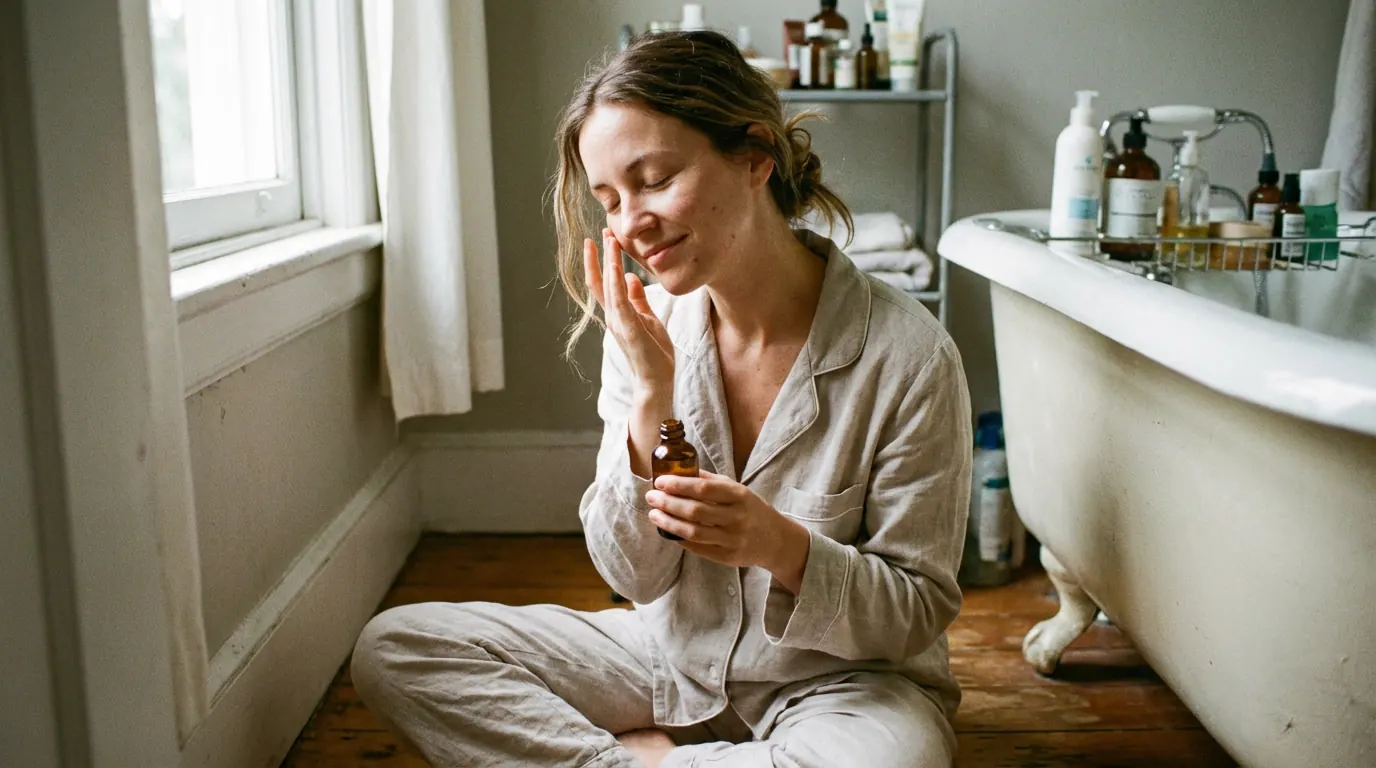
Read what's stacked in there: the action (applying cream), the facial expression (eyes closed, sensory), flyaway hair, natural skin texture, and a body posed at rest - all dropped into the seven-slot prompt structure. That's the entire module in one shot - a person, not a mannequin.
Conclusion: Doing Beats Displaying
Four to lock in:
1. The Trophy Pose is the loudest "ad" signal there is. Face-on, product held up, arms at sides. Break it in every creative.
2. Prompt a verb, not a pose. "Applying," "reaching," "laughing," "leaning" - a body doing something reads real. A body positioned for the camera reads staged.
3. Hands need positive and negative together. The natural-grip gesture plus the deformed-hands negatives. One without the other fails.
4. Sit them down. Real lifestyle happens seated and settled, not standing at attention. It's the most underused pose in AI ads.
The rule of thumb that closes the module: a body doing something is always more believable than a body displaying something. The moment your subject stops holding the product and starts using it, the ad stops looking like an ad.
So the move: take your best product shot where the subject is holding the item up, and regenerate it as "using" the item instead - applying it, sipping it, opening it. Run both. My bet is the "using" version stops the scroll - because it looks like a moment, not a marketing photo.
Steal my ad concept & hook library
Every prompt, archetype, and hook I use in my own accounts. Updated weekly.
Join the free Skool community